Fasteners
Cracked Screw Washers
Rubber washers dry out and split after years of sun, so each screw head turns into a pinhole that drips along the purlin before it shows inside.
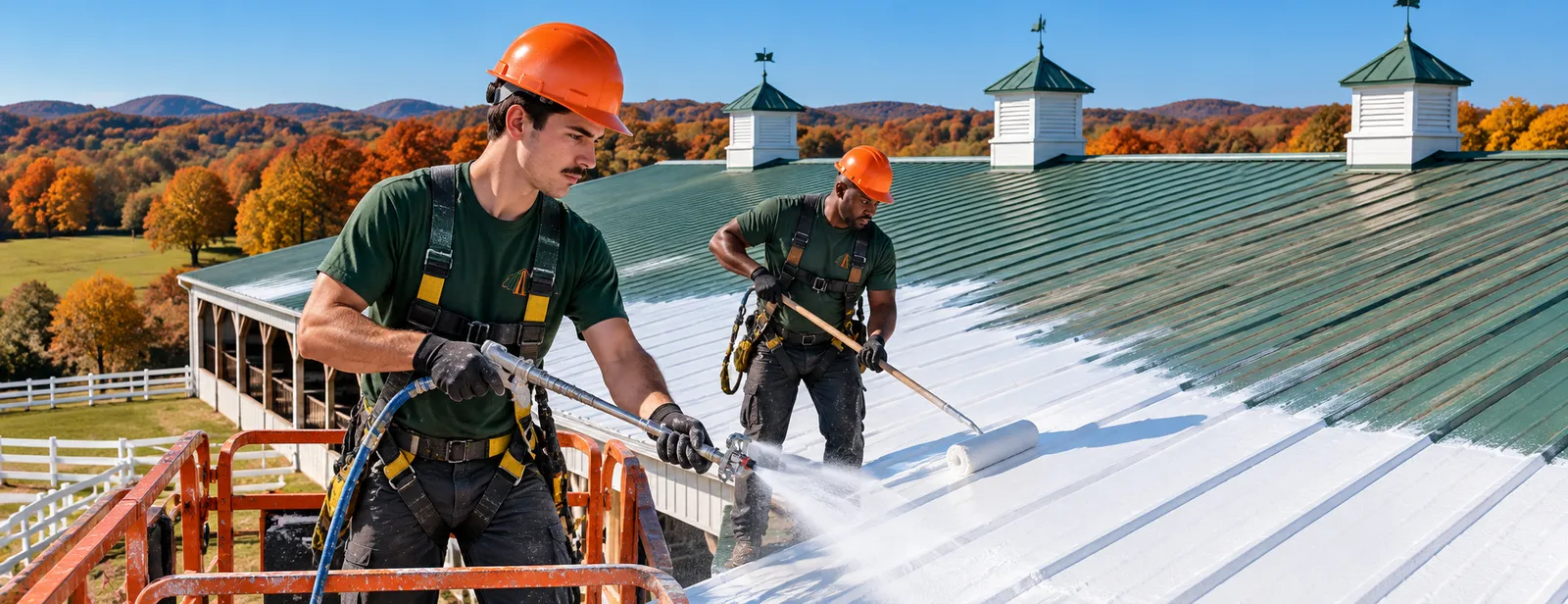
We coat commercial metal roofs in Richmond, KY. Our metal roof coating work covers warehouses, shops, barns, churches and strip centers, with silicone, acrylic, spray foam and shingle options.
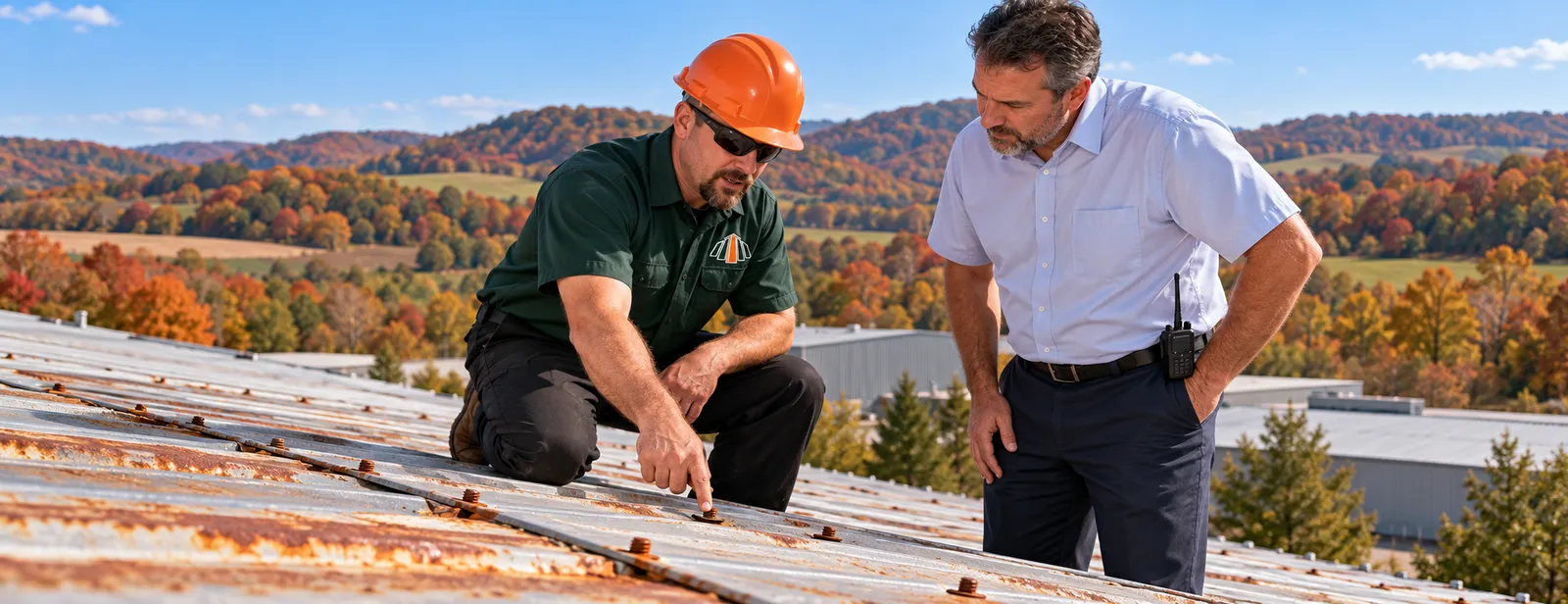
Most coating calls start with one question: is the steel still solid? These rows show what we look at and where each condition points.
| What We Check | Ready To Coat | Repair First |
|---|---|---|
| Panels | Surface rust and chalky paint over steel that stays firm under a screwdriver | Rust-through or pinholes at end laps and along the eave |
| Fasteners | Screws that tighten, or take a slightly larger screw in fresh metal | Whole rows spinning in rusted-out holes |
| Laps And Seams | Side laps and end laps that clean up and dry out | Laps pulled open by panels lifting off the purlins |
| Skylight Panels | Fiberglass panels still whole, with edges that can take fabric | Brittle, yellowed panels that crack under light pressure |
| Framing | Straight purlins with fasteners that still hold | Bent or rusted purlins and sagging bays between them |
A roof with rows in the right-hand column still has a path forward: spot repairs or new panels go in first, then the coating system.
Leaks on older metal buildings come from a short list of spots. These are the ones we find most often on a roof walk.
Rubber washers dry out and split after years of sun, so each screw head turns into a pinhole that drips along the purlin before it shows inside.
Water travels sideways under an end lap where one panel overlaps the next, and on a low slope the ceiling stain often shows several feet from the joint.
Wind works ridge cap screws and foam closures loose over the years, leaving gaps at the peak where blowing rain and nesting birds get in.
Red rings around fastener heads and along panel edges mark where the factory paint has failed and the steel underneath has started to corrode.
Old fiberglass skylight panels turn brittle and crack, and their perimeter laps were often left unsealed against the metal around them.
Gutters packed with rust flakes and leaking end seams push water back under the eave trim and down the face of the wall panels.
Every metal roof we walk lands in one of three places. The signs below help you guess which one before we arrive.
A few leaks on an otherwise solid roof get fixed first, so any later coating goes over a dry, tight surface.
Signs You Are HerePanels with surface rust, tired screws and leaking laps take the full system: cleaning, fastener work, seam detail, then base and top coats.
Signs You Are HereSteel rusted through across large areas, or damaged purlins, calls for new panels or a new roof before any coating plan.
Signs You Are HereTell us where the drip shows inside and what sits above it on the roof. That detail points the first visit at the right panels.
Coating next season? Start a free estimate for your building and we will set up the roof walk.
Get A Free Ballpark EstimateFive decisions, in the order we make them with you, take a metal roof from the first walk to a finished topcoat.
We walk every panel run, check fastener rows and laps, press on rusty spots, and look at the panel undersides from inside the building.
The walk sorts the building into coat, restore, re-panel or replace. Steel that flexes or crumbles under a screwdriver gets replaced before anything else happens.
Silicone goes where water lingers after rain, acrylic on slopes that shed water fast, and spray foam where condensation drips from bare panels.
Most shops and warehouses stay open. We plan lift space along one wall, move equipment back from the eave, and shut rooftop intakes during spraying.
Fastener count, rust level and coating thickness set the first price. Recoating the same roof later, instead of buying new panels, sets the long-run cost.
A coating keeps the steel you already own and seals the parts that leak. These are the gains owners notice first.
Panels, purlins and trim stay on the building. Skipping tear-off means fewer dumpster trips and no open roof over stored goods while new metal goes up.
Each exposed fastener gets tightened or replaced and capped, and every lap gets fabric, so the whole roof is treated at once instead of one drip at a time.
A white topcoat reflects sun that faded panels soak up. The Department of Energy rates cool roofs by solar reflectance and thermal emittance, each scored from 0 to 1.
When the topcoat wears thin, a cleaned and primed roof takes another coat of the same product, a far smaller job than buying and setting new panels.
Warehouses, farm shops, churches and strip centers in these nine towns are where we coat metal roofs most. Building somewhere else? Call us or send us a message.
City permits start in the Berea portal, and rooftop units or conduit on the panels get planned before the crew arrives.
Equipment sheds and hay barns with open framing, where condensation rusts the panels from the underside.
State-reviewed jobs where skylight panels are either kept for daylight or closed in with steel.
Shops and warehouses where gutters, downspouts and wall-panel bottoms decide where the roof water ends up.
Screw-down and standing seam roofs where purlins get checked, sistered or replaced before any coating.
Machine sheds turned into shops and storage, often with a lean-to roof tied into the main ridge.
Older metal buildings where ridge caps, closures and eave trim get reworked along with the coating.
Buildings near the river and the rail yard, where grime and mildew need a full wash before primer.
Metal roofs with a service mast through the panels, rebooted and sealed before the base coat.
Short answers to what owners ask on the first roof walk. More are in our metal roof coating FAQ.
Question about your own roof?
Call UsIt covers the panels, screw heads and laps with one continuous rubbery layer, so water has far fewer ways in.
Before that layer goes on, the usual leak points get their own treatment: cracked washers, open end laps and loose ridge caps are sealed with sealant and reinforcing fabric. A white finish also reflects sun that faded panels absorb.
Six steps, always in the same order. We inspect your roof, power wash it, and repair screws, panels and trim.
Rusted metal gets primer, laps, seams and curbs get fabric, and then the base and top coats go on to the thickness the product calls for. Each area is detailed before the full coat covers it.
Usually, yes, since nearly all of the work happens on top of the panels. Expect a lift or ladder along one wall, hoses up the side, and equipment moved back from the eave.
Cover stored goods under known leaks before power washing, and plan where vehicles or livestock sit on spray days, because mist drifts with the wind.
A full walk, panel by panel, plus a look at the underside from inside the building.
We check fastener rows for backed-out screws, press on rust at end laps and eaves, note the gutters and ridge caps, and mark photos on a roof sketch. The walk sorts the roof into coat, restore, re-panel or replace.
We do. Commercial shingle roofs in good shape can take a shingle roof coating, and low-slope roofs that hold water lean toward silicone.
Spray foam goes over metal panels where insulation is the goal. Every system starts with the same roof walk.
Tell us about the building, or call to talk through the leaks, the panel type and the timing you have in mind.
Leave your name and number and we will call you back about your commercial roof. Or call us now at (859) 204-8096.