Condensation
Drips Without A Leak
Water falls from the panel undersides on cool mornings even after a dry night. That is condensation forming on bare, uninsulated steel.

We install spray foam roofing in Richmond over metal panels and other solid roofs, burying screws, filling ribs and adding insulation under a protective coating.
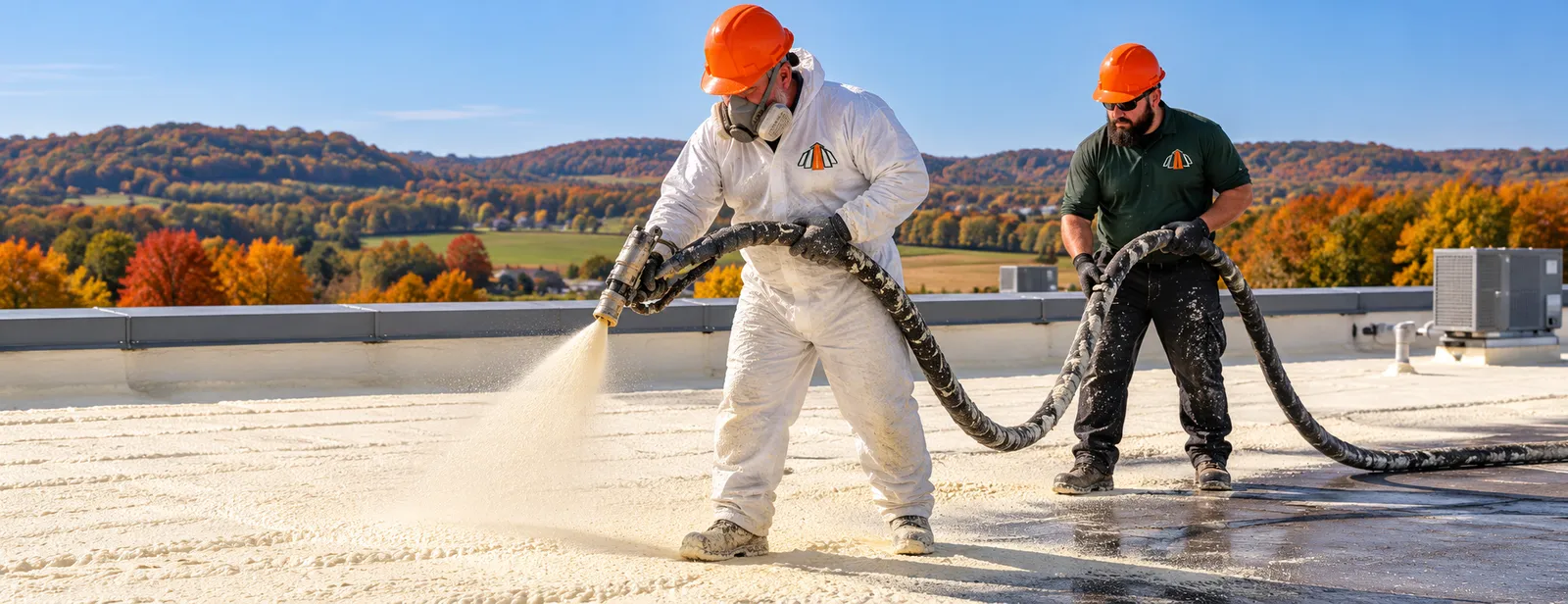
Both seal the roof. Foam also adds insulation and changes the roof edge, so the right choice turns on the building.
| Factor | Coating Only | Spray Foam Plus Coating |
|---|---|---|
| Insulation | None added | Added with each inch of foam |
| Screws And Laps | Sealed one by one | Covered over by the foam |
| Panel Ribs | Profile stays visible | Filled flat, with slope possible |
| Roof Edge | Little change | Thicker edge that needs new trim |
| Upkeep | Recoat over time | Recoat over time to keep sun off the foam |
Closed-cell foam insulates at roughly R-6 per inch once aged, according to a DOE Building America guide.
These conditions point past a coating alone toward foam over the panels.
Water falls from the panel undersides on cool mornings even after a dry night. That is condensation forming on bare, uninsulated steel.
Bare metal roofs over shops and storage bake in summer, and a white coating alone leaves the space below without insulation.
On a large R-panel roof, sealing each screw one at a time is slow work. Foam covers them all in a single continuous layer.
Panel flutes and sagging bays that hold water can be sloped out by building the foam thicker toward the gutters.
Foam always gets a coating over it. The topcoat choice and the foam thickness are set during the roof walk.
A good pick where water still sits in spots after the foam is shaped, since silicone holds up under standing water.
Silicone roof coatingSuits foam shaped to drain fully, with a water-based white finish and easy recoats years later.
Acrylic roof coatingThicker foam where insulation or slope is the goal, thinner where the roof only needs a sealed surface, all laid out before spraying.
Foam with a coating changes more than the roof surface. These are the gains owners of bare metal buildings notice.
Each inch of closed-cell foam adds roughly R-6 once aged, which warms the panel undersides that collect condensation on cold mornings.
Foam buries fasteners and laps under one layer, so the leak points of an R-panel roof stop being separate repairs.
Sprayed thicker toward the gutters, foam moves water off low spots that a coating alone would leave holding water.
The panels stay on as the deck under the foam, so the building keeps its roof through the whole job and skips tear-off.
Drips with no rain point to condensation under bare steel. Tell us when it happens and what is stored below.
Call if water is coming through and you want help telling a leak from condensation.
Call UsFive decisions, from the first walk to the protective topcoat.
We walk the panels, check for rust-through and loose screws, and look at the underside from inside for condensation stains and old insulation.
Foam needs a dry, clean, solid surface to stick. Loose panels get fastened, rust gets treated, and the roof is washed and dried first.
Thickness is set for insulation and for slope toward the gutters, with the roof edge planned for new trim to match the added height.
Rooftop air intakes near the work are shut off, and vehicles and equipment downwind are moved or covered before spraying starts.
Sunlight breaks down bare foam, so a silicone or acrylic coating goes over it soon after spraying, chosen by how the shaped roof drains.
Foam is only half the system. These coatings finish it, and one of them covers metal roofs that need no foam at all.
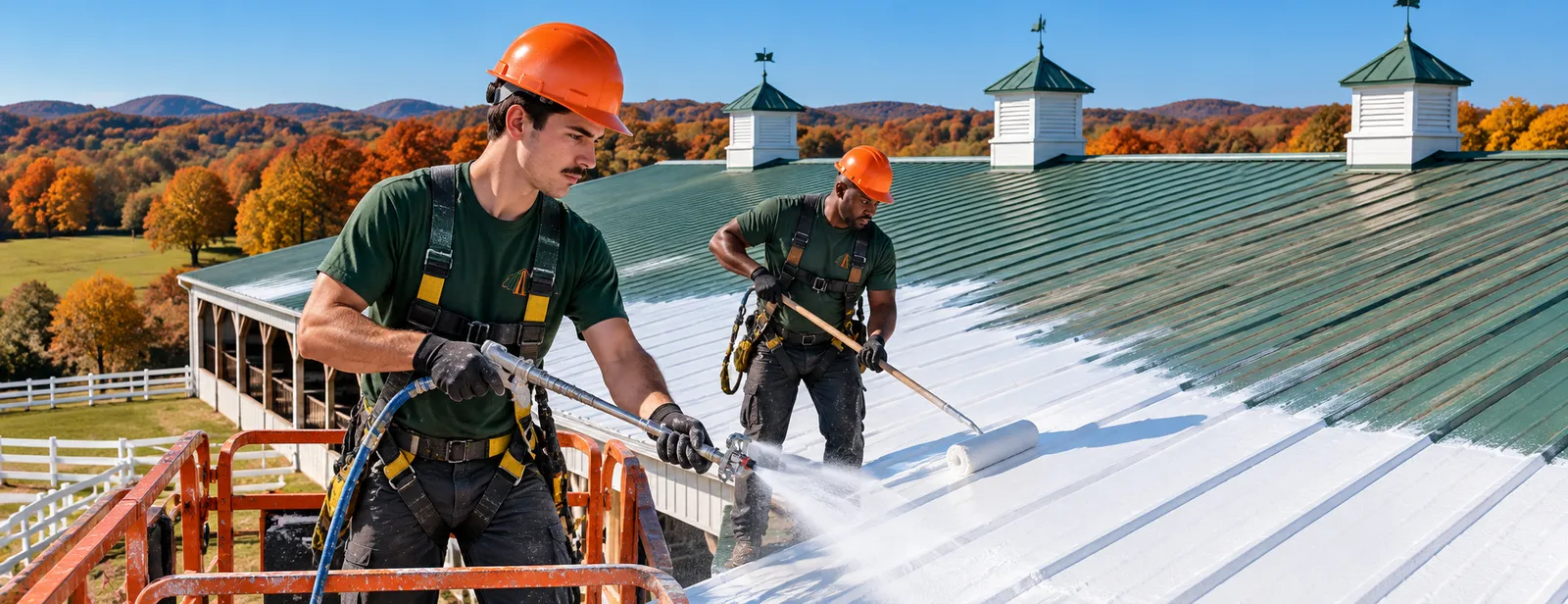
Panels that only need sealing at screws, laps and rust, where insulation is no concern.
Richmond Metal Roof Coating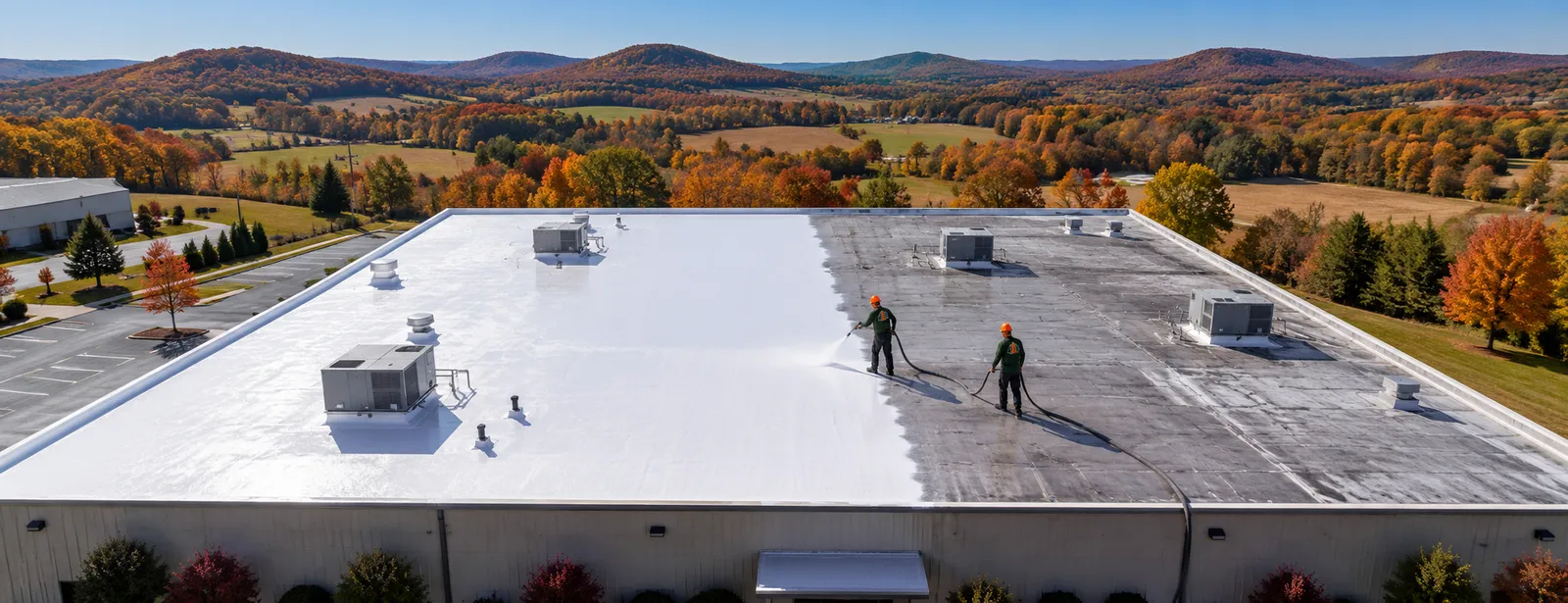
The usual topcoat over foam where a few low spots still hold water after shaping.
Richmond Silicone Roof Coating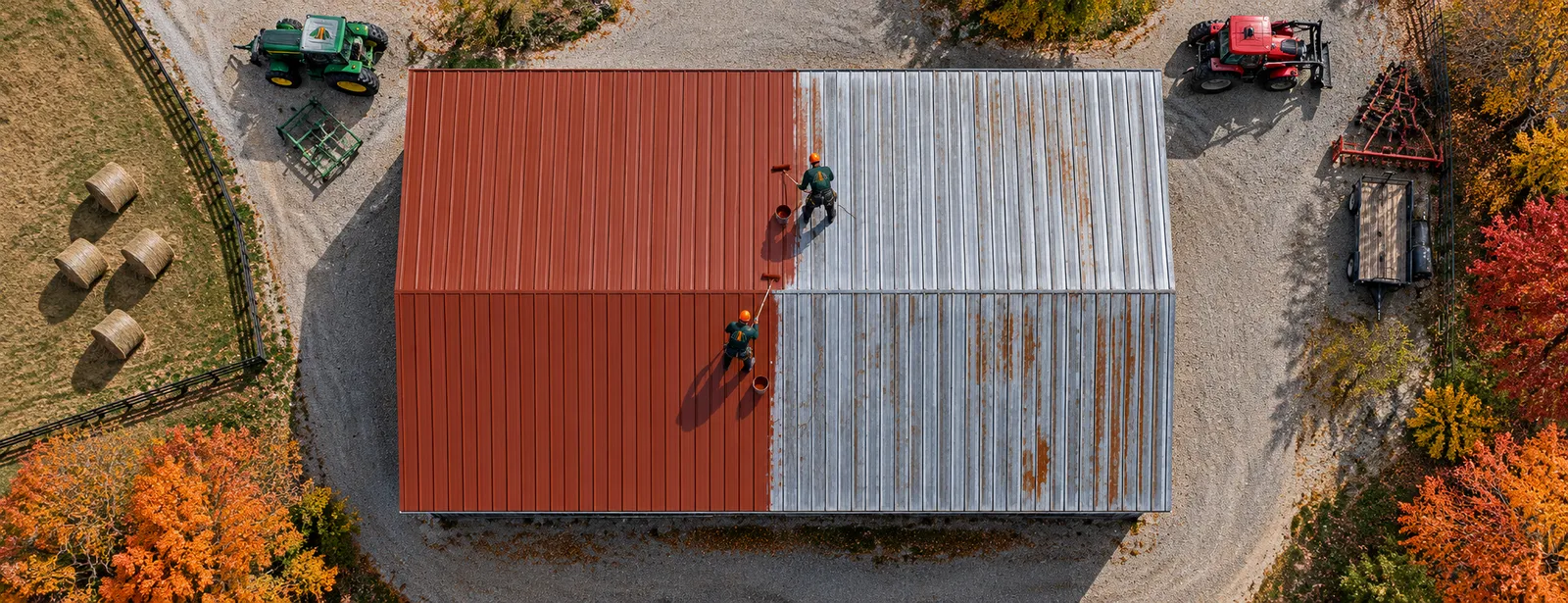
A white, water-based topcoat for foam shaped to drain fully, and a coating of its own for pitched metal.
Richmond Acrylic Roof CoatingWhat owners ask before putting foam over a metal roof.
Question about your own roof?
Call UsIt depends on whether the building needs insulation. Foam fills the ribs into one surface, buries the screws and adds roughly R-6 per inch once aged, while a coating alone seals the panels and leaves the ribs showing.
Foam fits uninsulated metal buildings where condensation drips from the panels. The thicker edge then needs new trim.
A dry roof, temperatures inside the product limits, and low wind. Crews compare the panel surface temperature with the dew point first, because condensation on the steel stops foam and coating from bonding.
Metal collects dew overnight and north slopes stay wet longest, so starts often wait for the sun. Spring storm lines and short winter days shape the schedule here.
Sometimes. Foam over metal changes the roof assembly, so expect more questions where plan review applies.
Berea, for example, leaves institutional, state-owned, health-licensed and high-hazard buildings to the state for review. Describe the foam thickness and the new edge trim up front.
Programs change, so ask your provider before counting on one. Kentucky Utilities lists business efficiency programs, including a custom track that names insulation as an eligible measure.
Rural parts of the area are served by cooperatives such as Blue Grass Energy, Clark Energy, Inter-County Energy, Jackson Energy and South Kentucky RECC. Mention the foam, and ask about pre-approval steps before work starts.
Wet material has to come out first. Foam sprayed over trapped moisture holds it against the deck and can lose its bond.
On metal buildings with old insulation under the panels, the inside check during the roof walk shows whether anything is wet.
Send the roof size and address for a free estimate, or call to describe the drips, the heat and the building.
Leave your name and number and we will call you back about your commercial roof. Or call us now at (859) 204-8096.