Underside Rust
Rust From The Inside Out
Moist air from animals, hay or wet equipment condenses on cold panels and rusts them from below, while the top of the roof still looks fine.
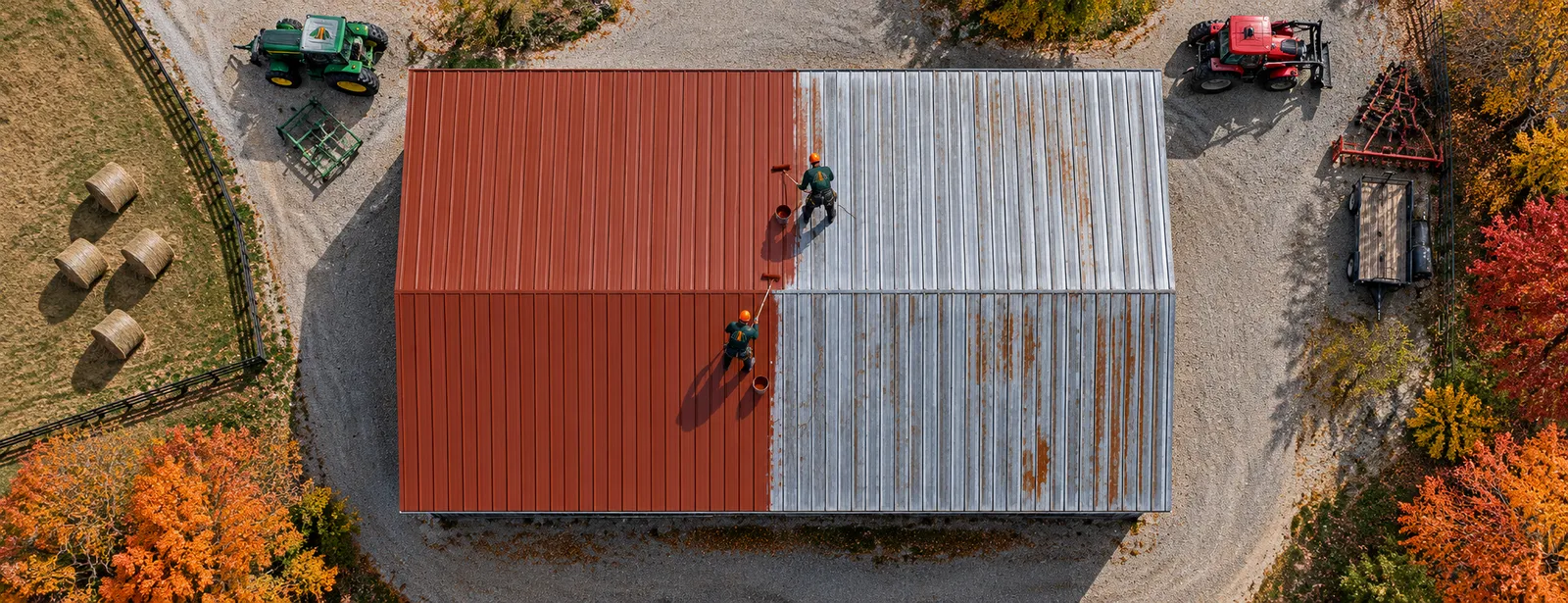
We do metal roof coating in Irvine and across Estill County for equipment sheds, hay barns and farm shops whose panels and framing are still solid.
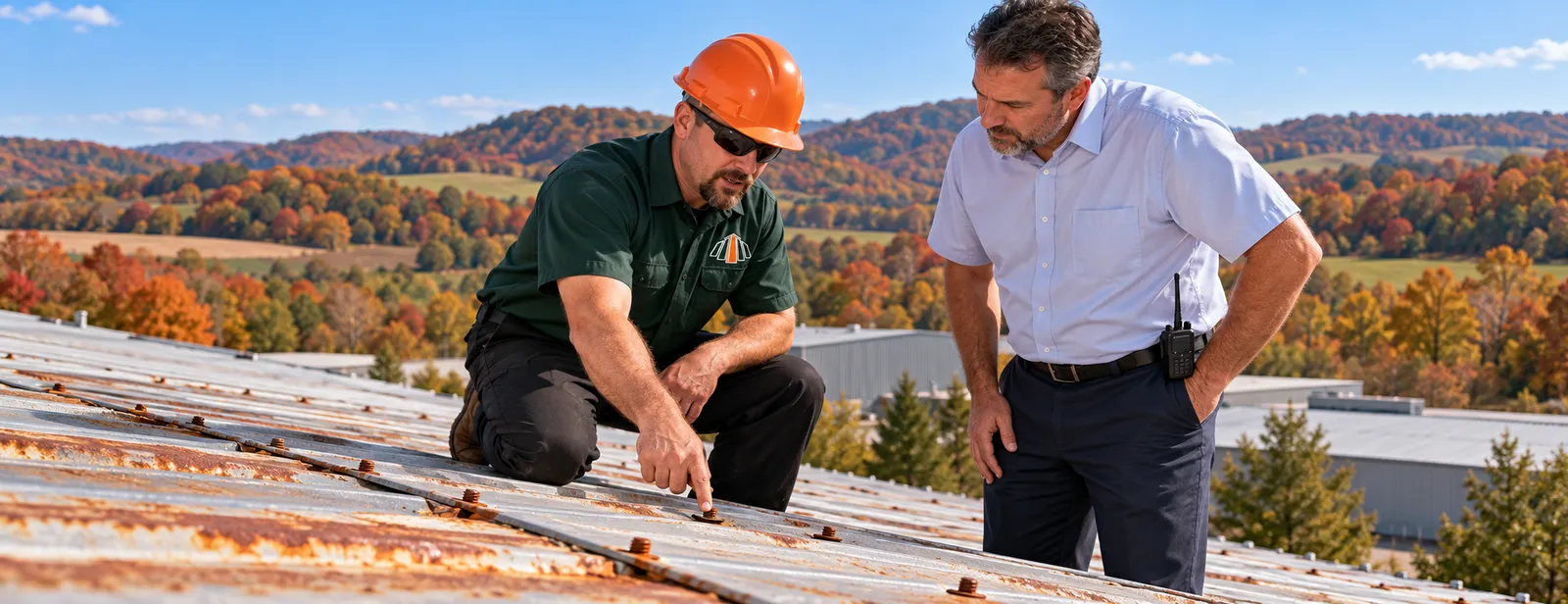
A lot of farm buildings here pair exposed-fastener panels with open, uninsulated framing. Moist air condenses on the cold steel, so the panels rust from below as well as from rain on top.
The roof walk includes the inside of the barn: panel undersides, the gutters, and the open eaves where birds build nests. When the complaint is water dripping on dry days, spray foam goes over the panels before the topcoat.
Working farm buildings wear in their own ways. These are the conditions that shape the plan.
Moist air from animals, hay or wet equipment condenses on cold panels and rusts them from below, while the top of the roof still looks fine.
Birds nest in open eaves and ridge gaps, and their droppings and nesting hold moisture against the steel.
Low eaves and door headers take hits from equipment, bending trim and opening the panel laps above them.
Hay chaff, leaves and nesting material fill barn gutters, so water backs onto the eave and rusts the last row of panels.
Coating a farm building keeps it working through the season. These are the gains for barns and sheds.
Nearly all the work happens on top of the panels, so hay, equipment and livestock stay inside, with a plan for animals near the eave line and for equipment parked downwind on spray days.
On buildings where condensation drips onto hay or tools, foam over the panels adds insulation over the cold steel where the drips start, and covers every screw at the same time.
Solid steel and framing stay put, so the building skips re-paneling, the cleanup that comes with it, and a stretch of open roof over stored feed.
Primer and a continuous coating keep rain off the panel tops at laps and screws, where farm roofs rust first from the weather side. A white topcoat also cuts summer heat under the panels.
Farm buildings near Irvine get one of these, picked by drips, slope and use.
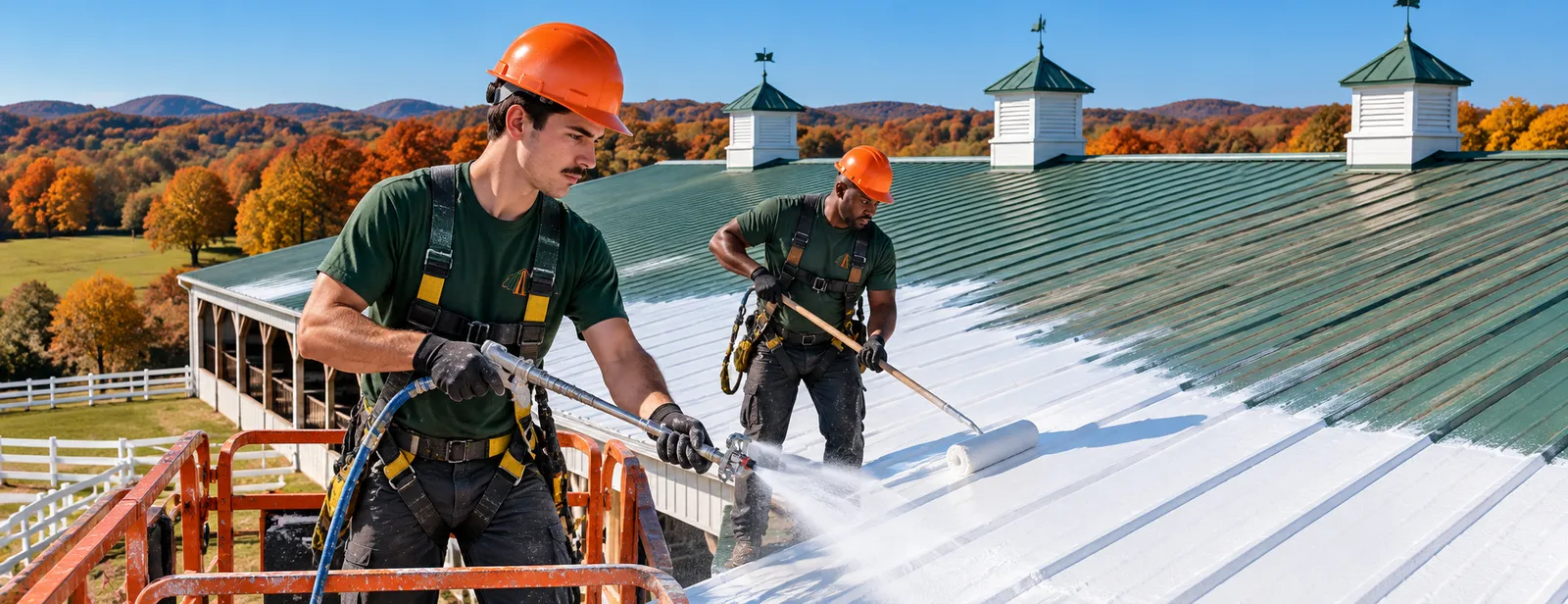
Screw-down shed roofs get every fastener sealed and every lap wrapped in fabric under a base and top coat. Bent eave trim gets straightened or replaced.
Metal Roof Coating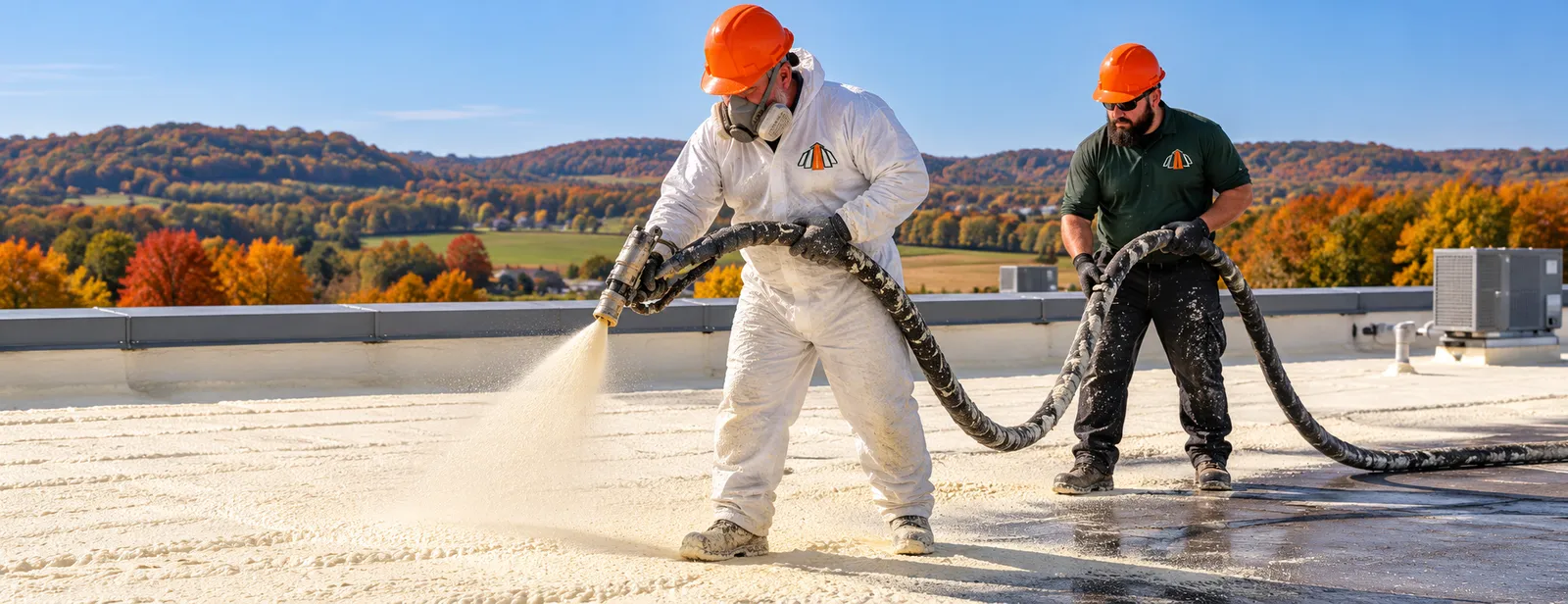
Barns where condensation drips on hay or tools get foam over the panels for insulation, then a protective coating. Edge trim is replaced to fit the added thickness.
Spray Foam Roofing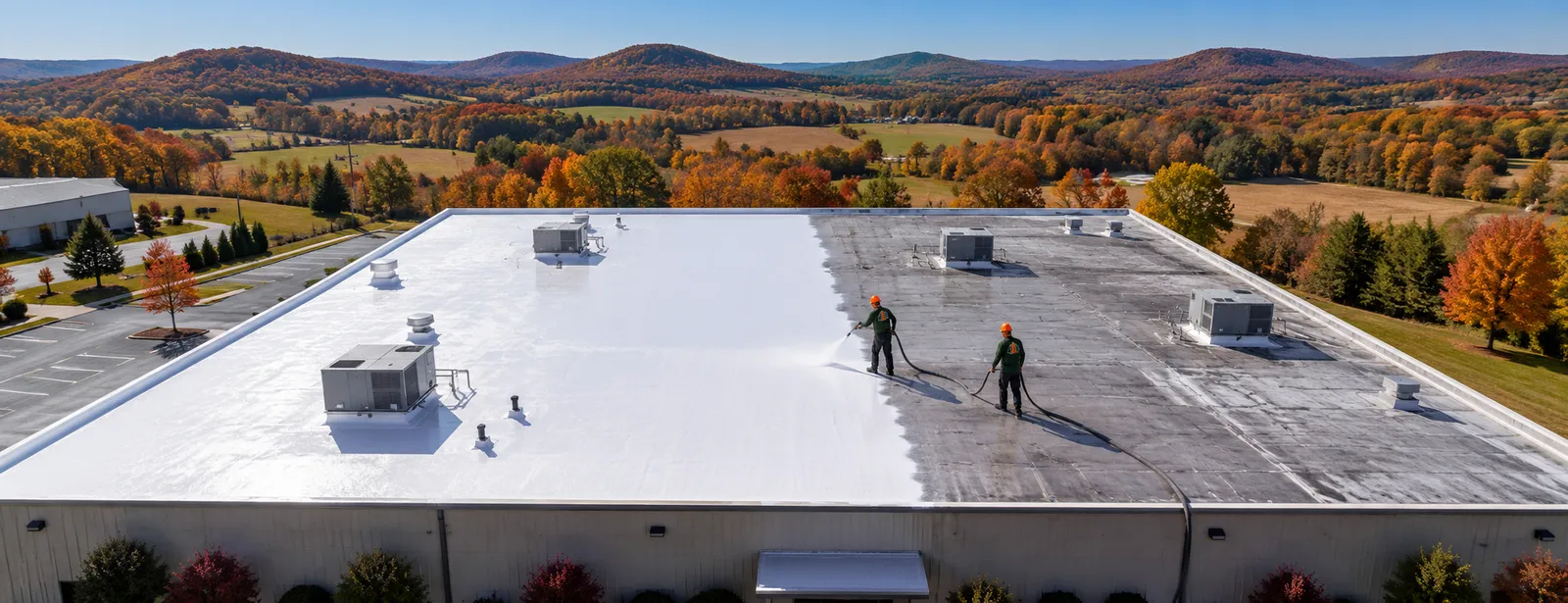
Lean-to roofs with little slope that hold water get silicone where the puddles sit. The main roof can take a different coating.
Silicone Roof CoatingTell us whether it drips after rain or on cool, dry mornings. That one detail separates a leak from condensation.
Five decisions built around a working barn or shed.
We walk the panels and then go inside to check the undersides, the open eaves and the gutters for rust, drips and nesting.
Drips after rain point to screws and laps. Drips on dry mornings point to condensation on the panels, which calls for foam under the coating.
Livestock near the eave line get a plan, and equipment parked downwind of the roof is moved or covered before any spraying.
Estill County construction runs through the Kentucky HBC, which lists no local building inspector. Check with the state on whether the roof work needs a permit.
Sheds get a metal roof coating, dripping barns get foam and a topcoat, and flat lean-tos get silicone where water sits.
We coat metal roofs in these towns as well as Irvine. Building outside the list? Call us or send us a message.
City permits, state plan review, equipment-heavy roofs.
Rockcastle County roofs with old skylight panels to sort.
Powell County shops where gutters and downspouts matter most.
Jackson County roofs with purlins checked before coating.
Unincorporated farm sheds with lean-to roofs, some now shops.
Garrard County roofs needing ridge cap and eave trim work.
River and rail town where roof panels get washed first.
Outside Berea's line, with service masts through roof panels.
What Irvine owners ask about permits, farm buildings and timing.
Question about your own roof?
Call UsThe Kentucky HBC. Commercial construction in Irvine and the rest of Estill County runs through the state, and the Estill County listing shows no local building inspector.
Bring roof measurements, the panel type, rust photos at end laps and eaves, and notes on panels being replaced. Swapping skylight panels for metal or adding curbs counts as more than coating, so describe the full job and allow time for the state step.
Yes, when the panels and framing are still solid. Equipment sheds, hay barns and farm shops around Irvine often have exposed-fastener panels on open, uninsulated framing.
Estill County falls under the NWS office in Jackson, and Blue Grass Energy, Clark Energy and Jackson Energy list the county in their service areas.
It needs a plan. Spray mist drifts on breezy days, so animals near the eave line are moved or kept clear of the roof edge, and spraying waits for calm hours.
Nests and droppings at the eaves and ridge come out during the wash, since they hold moisture and keep primer from bonding. New closures at the ridge and eave then block re-entry.
Warm, dry weeks suit acrylic best, while silicone and foam handle a wider range of weather. Barns full of hay in late summer are often easier to work around in spring or fall.
On the outside, over the top of the panels. Foam sprayed on top buries the screws and laps and adds insulation, then a coating protects it from sun. The inside of the barn stays as it is, apart from a check of the panel undersides.
Start a free estimate for your Irvine barn or shed, or call to talk through drips, rust and the season.
Leave your name and number and we will call you back about your commercial roof. Or call us now at (859) 204-8096.