Red Rust
Rust At Laps And Eaves
Loose scale gets wire-brushed or ground off, then a rust-inhibiting primer goes on. Spots that crumble when pressed with a screwdriver get new steel first.
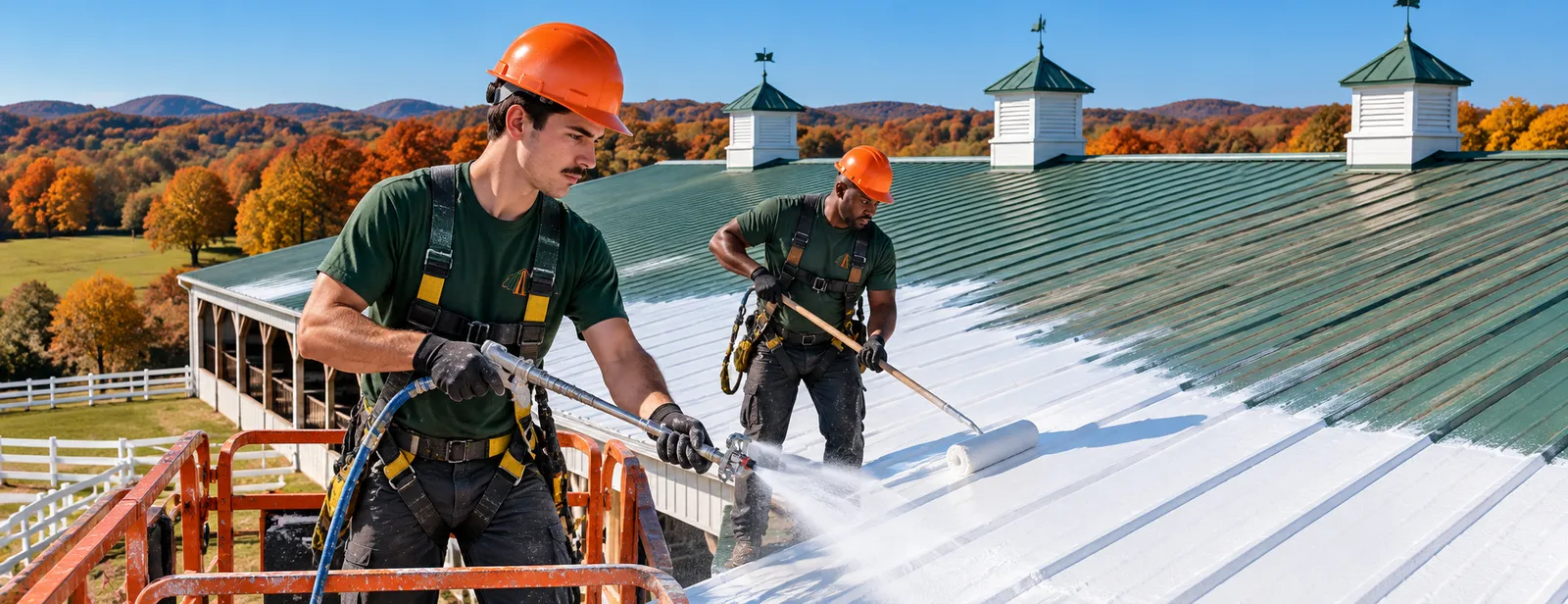
We coat commercial metal roofs in Richmond, from exposed-fastener R-panel warehouses to standing seam offices, sealing screws, laps and rust before the roof coating goes on.
Two panel types cover most commercial metal roofs around Richmond. The prep differs, so the first thing we note is which one you have.
| Detail | Exposed-Fastener R-Panel | Standing Seam |
|---|---|---|
| Where It Leaks | At screw heads with dried washers, and at end laps on low slopes | At open seam ends, end laps, and around curbs and pipes |
| Fastener Work | Every screw checked, tightened or swapped for a larger one, then capped | Few exposed screws, mostly at trim, ridge and eave |
| Lap Detail | Side laps and end laps get fabric or seam tape | Seam ends and any pulled-apart seams get treated |
| Panel Movement | Screws back out as panels heat and cool | Panels float on hidden clips |
| Biggest Labor Item | Fastener count across the whole roof | Seams, curbs and penetrations |
Both panel types get a full power wash and a rust check before primer goes down.
Each of these turns up on metal buildings around Richmond, and each gets its own repair step before any coating covers it.
Loose scale gets wire-brushed or ground off, then a rust-inhibiting primer goes on. Spots that crumble when pressed with a screwdriver get new steel first.
Galvanized steel grows a chalky white deposit as it weathers. It has to come off completely, or the primer bonds to the powder instead of the metal.
Panels swell and shrink with each day of heat, and that movement walks screws out of their holes. A slightly larger screw bites fresh metal.
Exhaust and rooftop unit curbs get reinforcing fabric where they meet the panels, because water collects on the uphill side of every curb.
Metal roofs here get one of three coating builds. The roof walk decides which, based on slope, standing water and whether the building needs insulation.
Bright white and water-based, a strong match for gable shops and pitched warehouse roofs that drain fast. It cures on warm, dry days.
Acrylic roof coatingBuilt for very low slopes where water sits at end laps or behind units after rain. Later recoats stay with silicone.
Silicone roof coatingFoam buries every screw and fills the panel ribs, adding insulation to bare metal buildings. A coating over the foam shields it from sun.
Spray foam roofingThese are the gains from coating a metal roof that still has solid steel and framing under the rust.
With solid panels and framing, coating usually costs less than tear-off, because the panels, purlins and trim stay right where they are.
Each exposed screw gets checked, tightened or swapped, then capped with sealant, so the most common leak on R-panel roofs is handled across the whole roof at once.
Primer on cleaned steel and a continuous coating over it keep water and air off the metal at laps, eaves and screw holes, where corrosion spreads first.
No dumpsters of old panels leave the property, and the work stays on top of the roof, so the shop or warehouse below keeps running through most of the job.
Water from a leaking screw often travels along the purlin before it falls. Tell us where it lands and where the nearest lap sits above it.
Planning a full coating? Start a free estimate with the roof size and address.
Get A Free EstimateFive decisions in work order, from the first panel we step on to the topcoat.
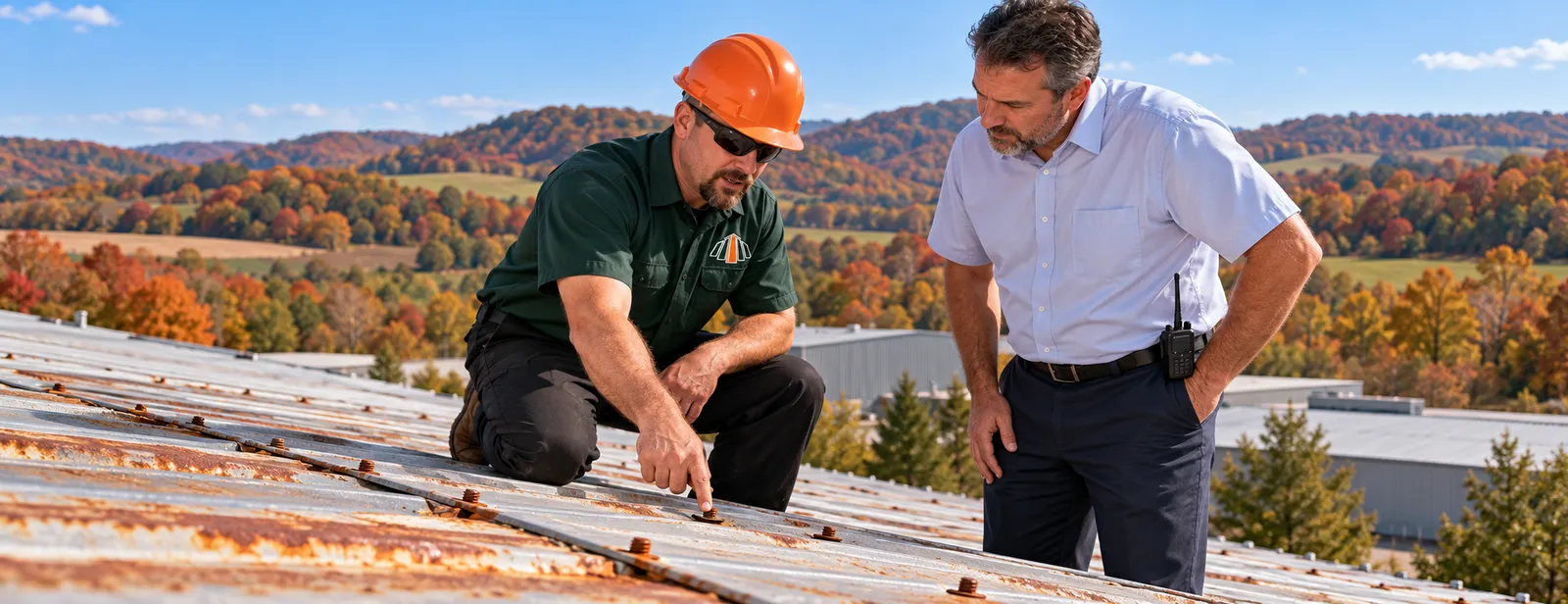
Every panel run gets walked. We test screws, press on rust at end laps and eaves, and check the panel undersides from inside for daylight and drip stains.
Power washing strips chalk, dirt and loose rust. Panels that flex or crumble when pressed get cut out or covered with new steel before primer.
Spinning and backed-out screws come out and larger ones go in. Tight screws get cleaned, and every head gets sealant or a cap.
Each lap is cleaned, dried and primed, then sealant is brushed in, polyester fabric is set into it, and more coating covers the fabric.
Base and top coats go on to the thickness the product sheet specifies, and film build is checked as the crew moves across the roof.
Some metal roofs need more than a coating over the panels. These systems handle standing water, steep slopes and bare, uninsulated buildings.
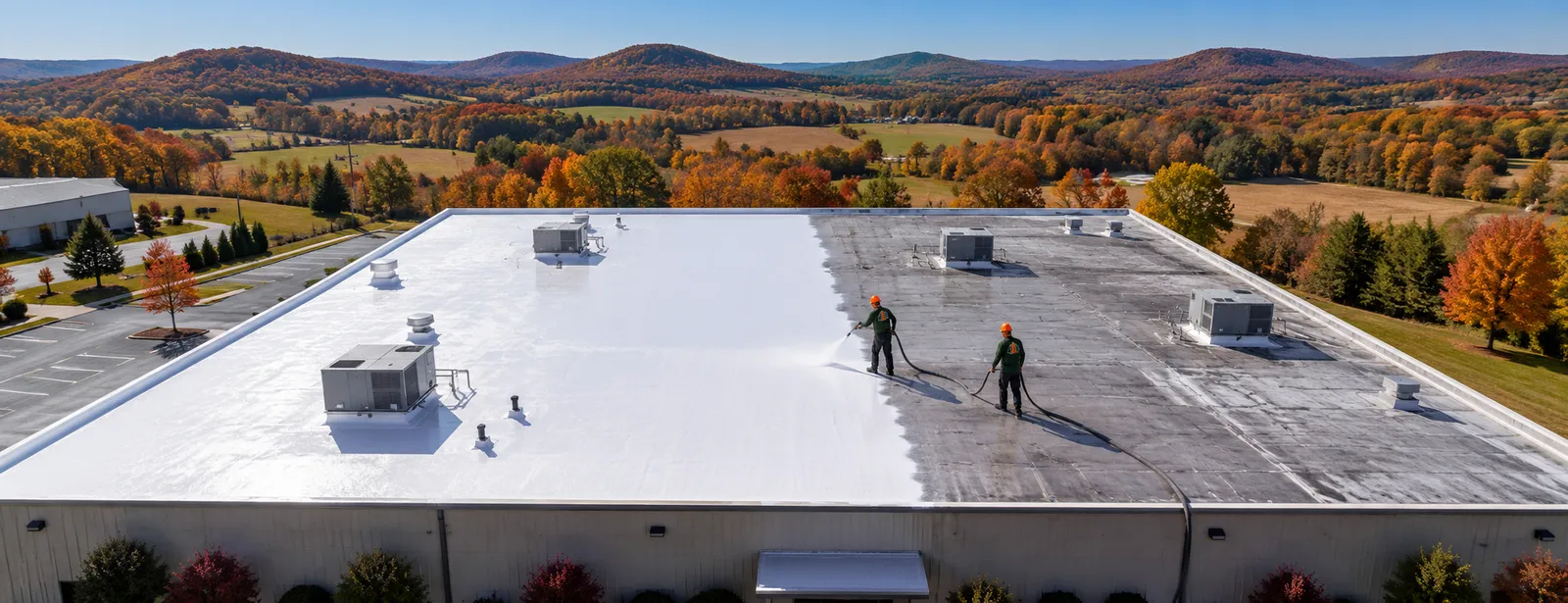
Low-slope metal where water sits at end laps or behind units for a day or more after rain.
Richmond Silicone Roof Coating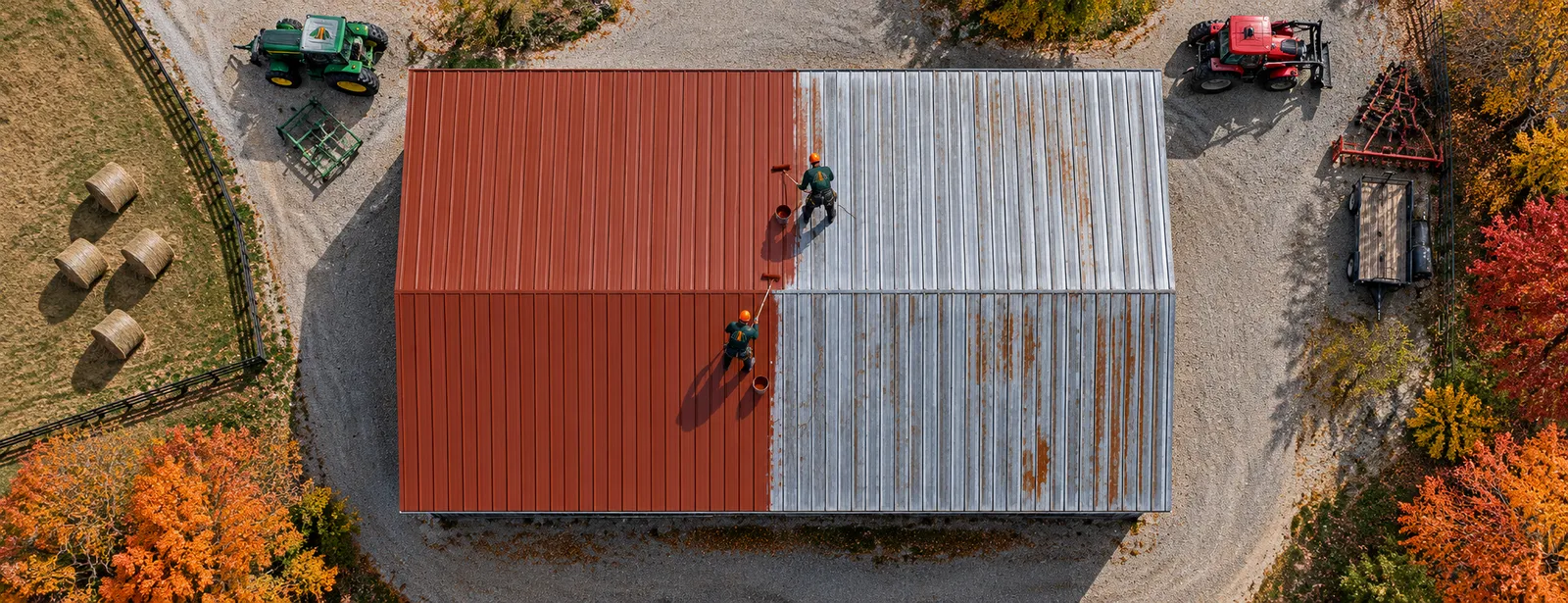
Pitched metal roofs on shops and barns that shed water fast and get plenty of warm, dry days.
Richmond Acrylic Roof Coating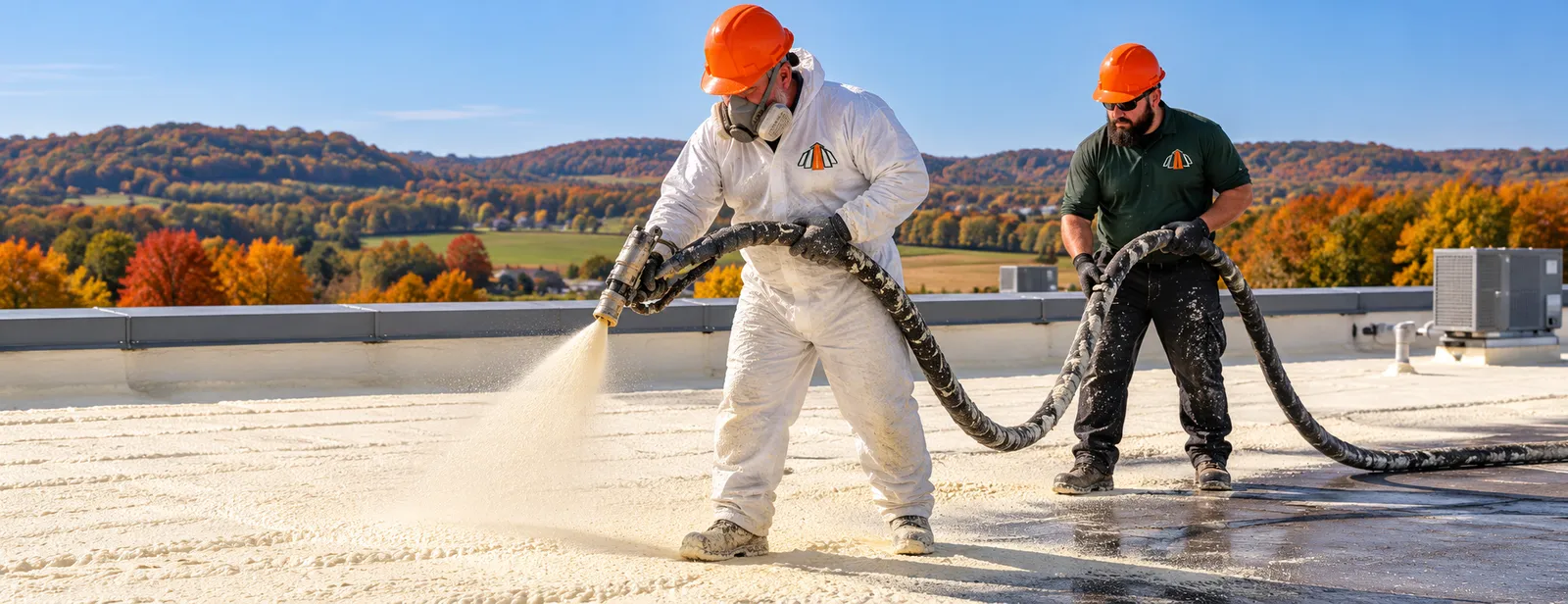
Bare metal buildings that drip condensation, where foam over the screws adds insulation and a smooth surface.
Richmond Spray Foam RoofingAnswers about panels, screws and rust on commercial metal roofs in Richmond.
Question about your own roof?
Call UsNo. Paint is a thin film for color, while a roof coating is a thick elastomeric layer that stretches as the steel heats and cools.
That daily movement loosens screws and opens laps, and a paint film cracks right at those joints. A coating is built to a measured thickness and paired with fabric or tape at laps, ridge caps and skylight edges.
Yes, over surface rust, once it is cleaned and primed with a rust-inhibiting primer. Metal rusted clear through gets new steel first.
Red rust on steel loses its loose scale to a wire brush or grinder. White rust on galvanized panels is cleaned off so primer reaches the zinc. Pinholes at laps or along the eave get patches or new panels.
Each exposed fastener gets checked, since dried rubber washers are one of the most common leak points on R-panel roofs.
Screws that spin, back out or sit on cracked washers are replaced, often with a slightly larger size that bites fresh metal. The rest are cleaned, and every head is sealed with elastomeric sealant or a cap before the base coat.
With a reinforced detail layer before the full coating goes on, because laps are where water runs sideways under the metal.
The lap is cleaned and dried, rusted edges are primed, sealant or base coat is brushed into the joint, fabric or seam tape is set in, and more coating covers it. Open seam ends on standing seam get the same care.
For a short walk, yes. The panel undersides show rust, daylight at screw holes and drip stains that the top of the roof hides.
Someone with keys to the shop or warehouse is enough, along with a clear path along the walls under the roof.
Send the roof size and address for a free estimate, or call to talk through screws, laps and rust on your building.
Leave your name and number and we will call you back about your commercial roof. Or call us now at (859) 204-8096.