Metal Roof Coating
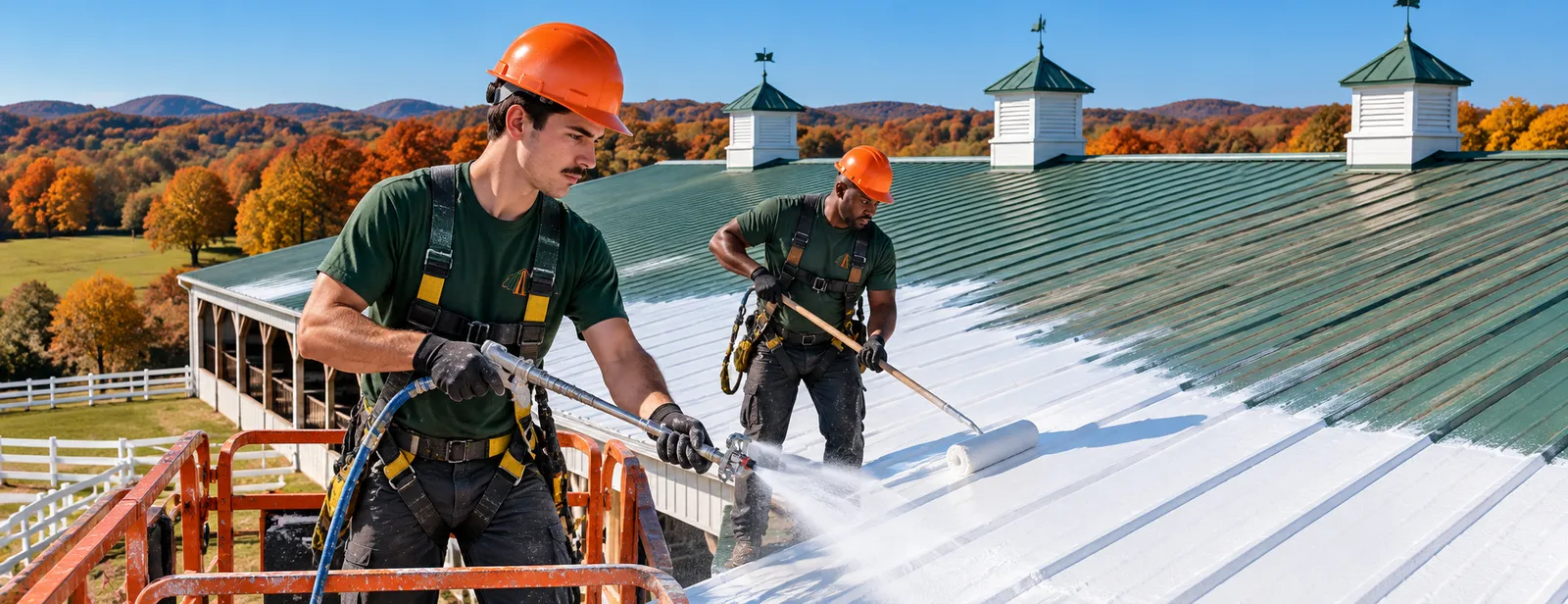
Exposed-fastener and standing seam roofs on warehouses, shops and barns, sealed at every screw and lap and coated over primed rust.
Richmond Metal Roof Coating
Our commercial roof coating services in Richmond cover metal, silicone, acrylic, spray foam and shingle roofs, each matched to the roof's slope, condition and use.
Each system covers a different kind of roof. The fit lines show where each one belongs.
Exposed-fastener and standing seam roofs on warehouses, shops and barns, sealed at every screw and lap and coated over primed rust.
Richmond Metal Roof Coating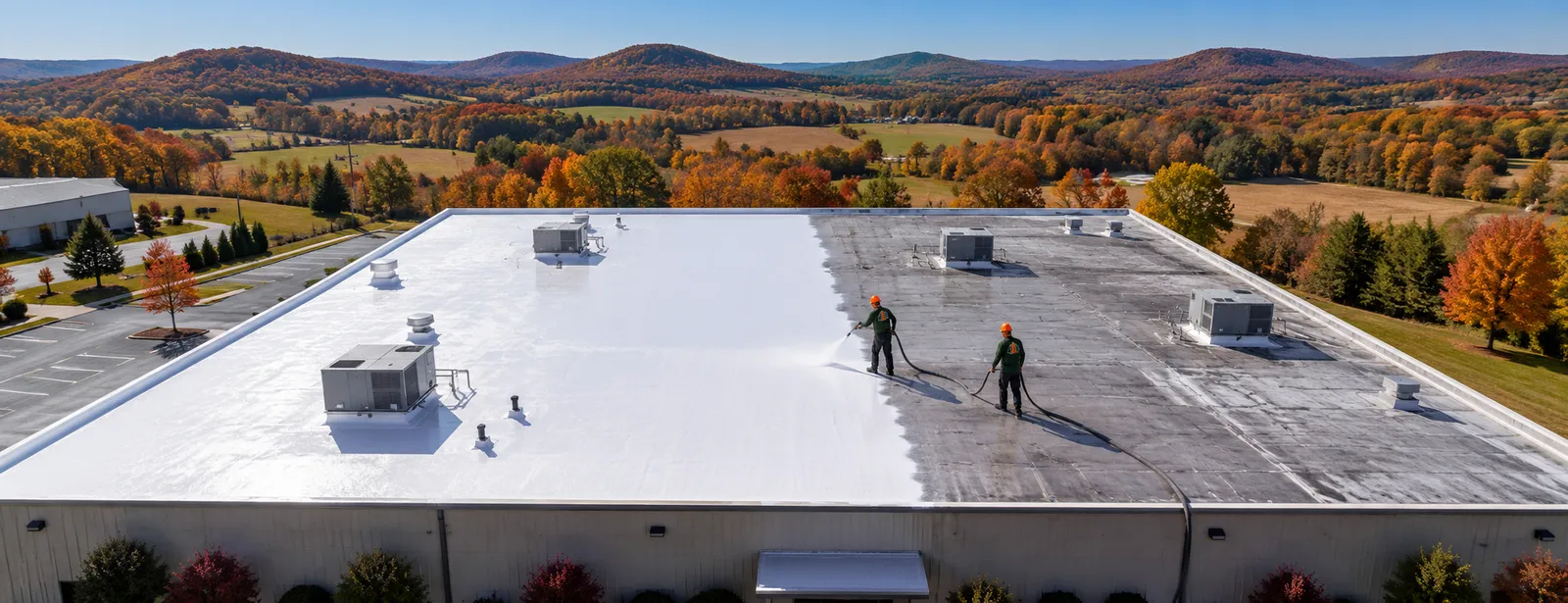
Low-slope roofs where rain sits for a day or more at laps, gutters and behind units, since silicone stands up to ponding.
Richmond Silicone Roof Coating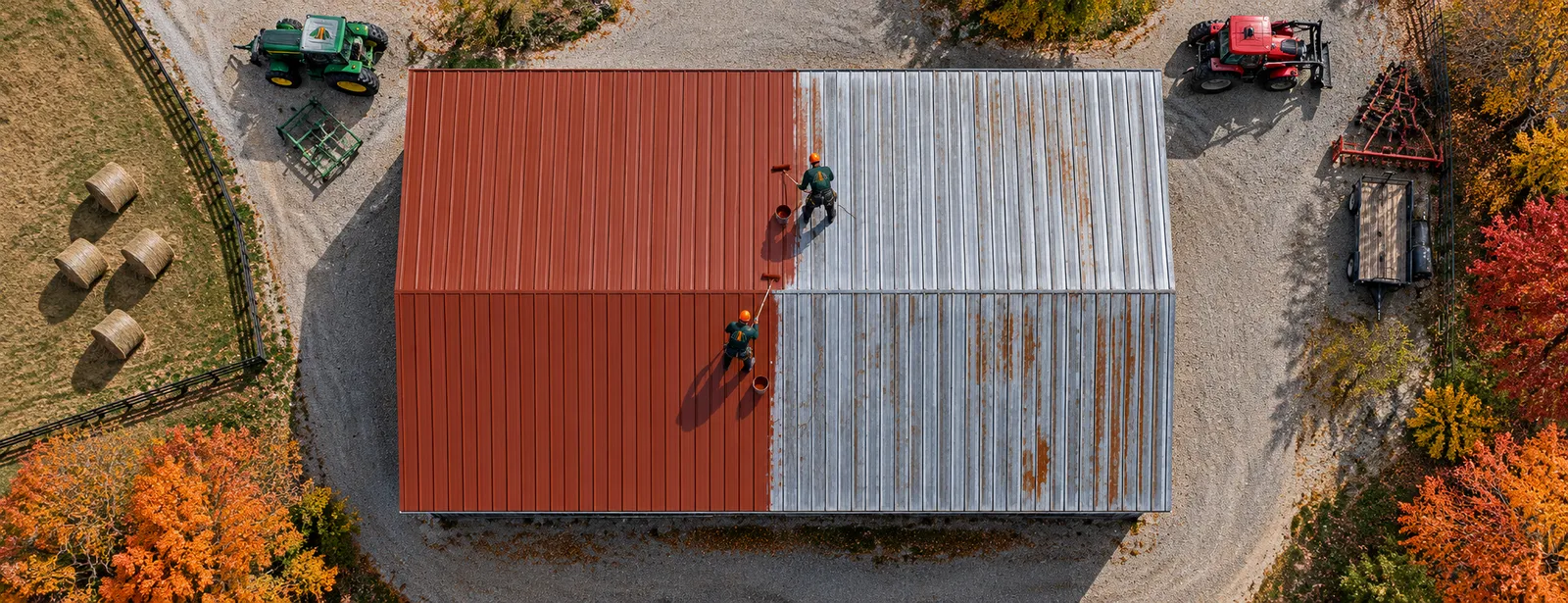
Pitched metal that drains quickly, finished in a bright white water-based coat and scheduled for warm, dry weather.
Richmond Acrylic Roof Coating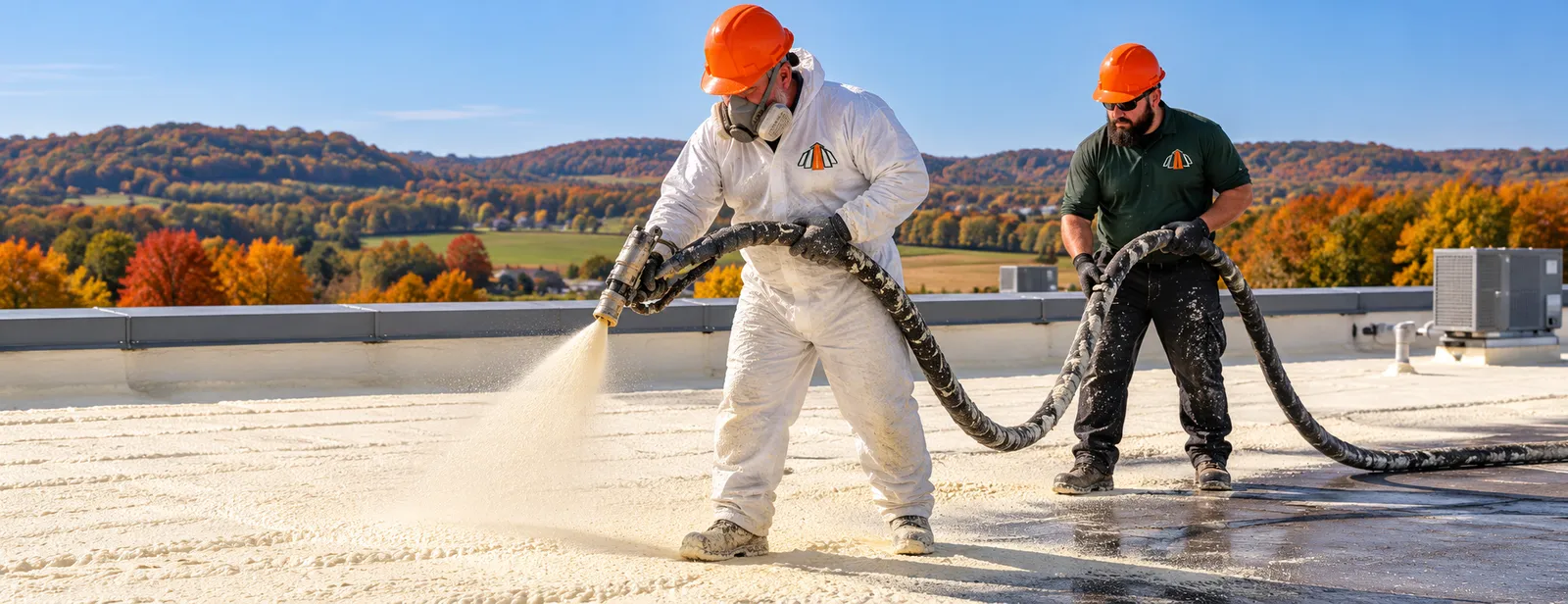
Bare, uninsulated metal buildings that drip condensation, with foam over the screws and ribs and a coating on top.
Richmond Spray Foam Roofing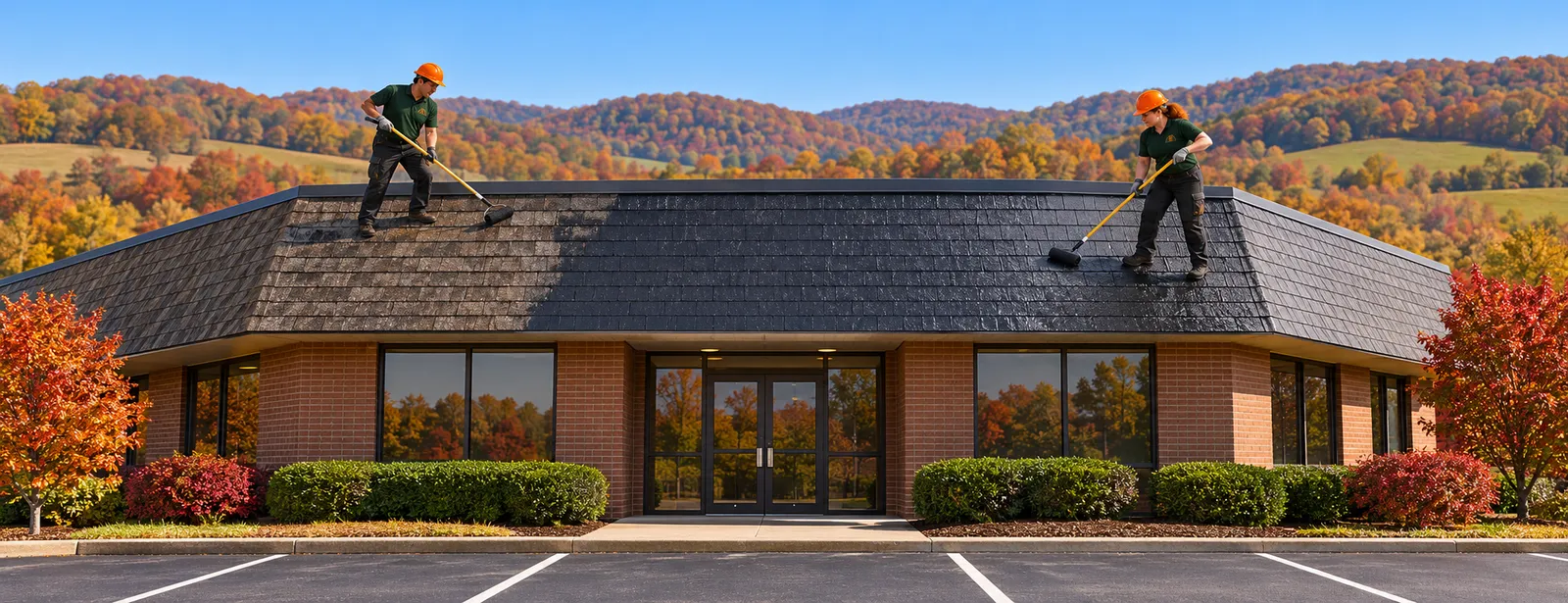
Commercial asphalt shingle roofs on strip centers, offices and churches that still lie flat and hold their granules.
Richmond Shingle Roof CoatingMatch the roof you have to the system that suits it. The roof walk confirms the choice.
| Roof Condition | Best Match | Why |
|---|---|---|
| Screw-down metal with rust bloom and leaking laps | Metal roof coating | Fastener and lap work is the core of the job |
| Very low slope holding water after rain | Silicone roof coating | Holds up under standing water |
| Pitched metal that sheds rain fast | Acrylic roof coating | Bright white, water cleanup, easy recoats |
| Uninsulated metal that drips on cool mornings | Spray foam roofing | Adds insulation and covers every screw |
| Flat, well bonded shingles that hold their granules | Shingle roof coating | Coats the field after flashing repairs |
| Many panels rusted through or bent purlins | Re-panel or replace first | Coating needs solid steel and framing under it |
Describe the roof slope, the panel type and where water shows. That narrows the choice before anyone climbs a ladder.
Every system follows the same five decisions. The answers change with the roof.
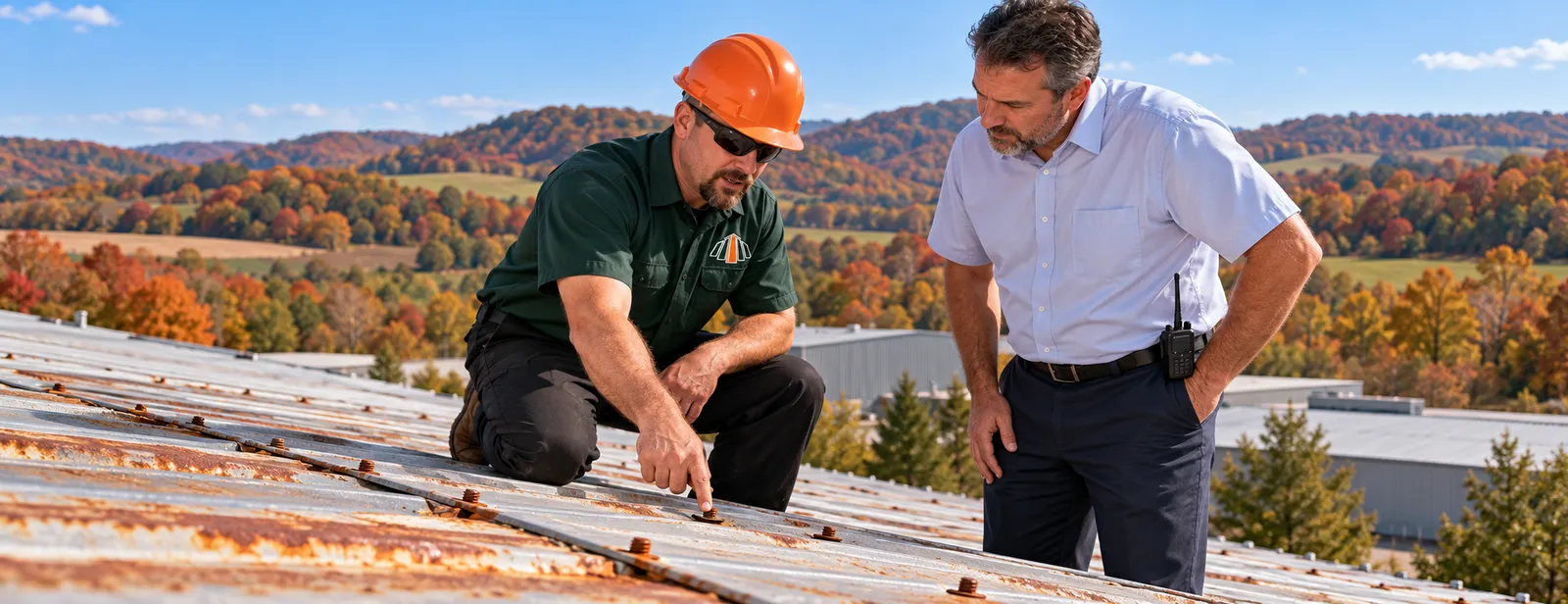
One walk covers every system: fasteners, laps, seams, flashing, gutters and skylight panels on top, and stains and daylight from inside.
The walk places the roof in one of four rows. The first two lead straight to coating; the others need new steel or structure first.
Slope, standing water, insulation needs and the existing surface pick the system: metal coating, silicone, acrylic, foam or shingle coating.
Cleaning, fastener work, rust primer, panel swaps and flashing repair are listed and priced ahead of the coating itself.
Lift locations, hose routes, rooftop intake shutoffs and equipment moves are planned so tenants, staff and stock keep working below.
Answers about fit, condition and cost across all five systems.
Question about your own roof?
Call UsLow-slope commercial, industrial and farm buildings whose panels are attached and mostly solid steel: R-panel warehouses and shops, standing seam offices and churches, equipment sheds with rusty screws, and strip centers with rusty gutters.
Holes rusted through many panels, or panels lifting off the purlins, need repair or re-paneling first.
Each gets its own step, since coating them like flat panels leaves leaks behind.
Brittle skylight panels are replaced or covered with metal, with fabric at their laps. Ridge cap closures and screws are checked and the cap laps sealed. Gutters are cleaned of rust, resealed and rehung, and curbs get fabric where they meet the panels.
When panels are rusted through across large areas, the purlins or fasteners no longer hold, or leaks come from structural movement.
Light rust and leaking laps get coated. Heavier rust in spots gets a few new panels and then the coating. Many rusted-through panels over solid framing get new panels, and damaged framing gets repaired and a new roof.
Roof size, rust level and fastener count, more than anything else. A plain standing seam roof takes less labor per square foot than an R-panel roof covered in screws.
Panel replacement, skylight swaps, coating type and thickness, lift access and ground conditions, and gutter, ridge cap and trim repair all add to it.
It can. IRS Publication 946 lists roofs among qualified improvements to nonresidential real property placed in service after the building itself.
For tax years beginning in 2026, the limit is $2,560,000, phasing out once qualifying property tops $4,090,000, and residential rental property is excluded. Ask a CPA how coating, fastener work and new panels are classified.
Start a free estimate with the roof size and address, or call and we will talk through which system fits.
Leave your name and number and we will call you back about your commercial roof. Or call us now at (859) 204-8096.