End Laps
Water Behind End Laps
On a very low slope, rain backs up behind each panel overlap and sits there until it evaporates, slowly working into the joint.

We apply silicone roof coating in Richmond to low-slope metal and other commercial roofs where water sits after rain, at end laps, gutters and behind rooftop units.
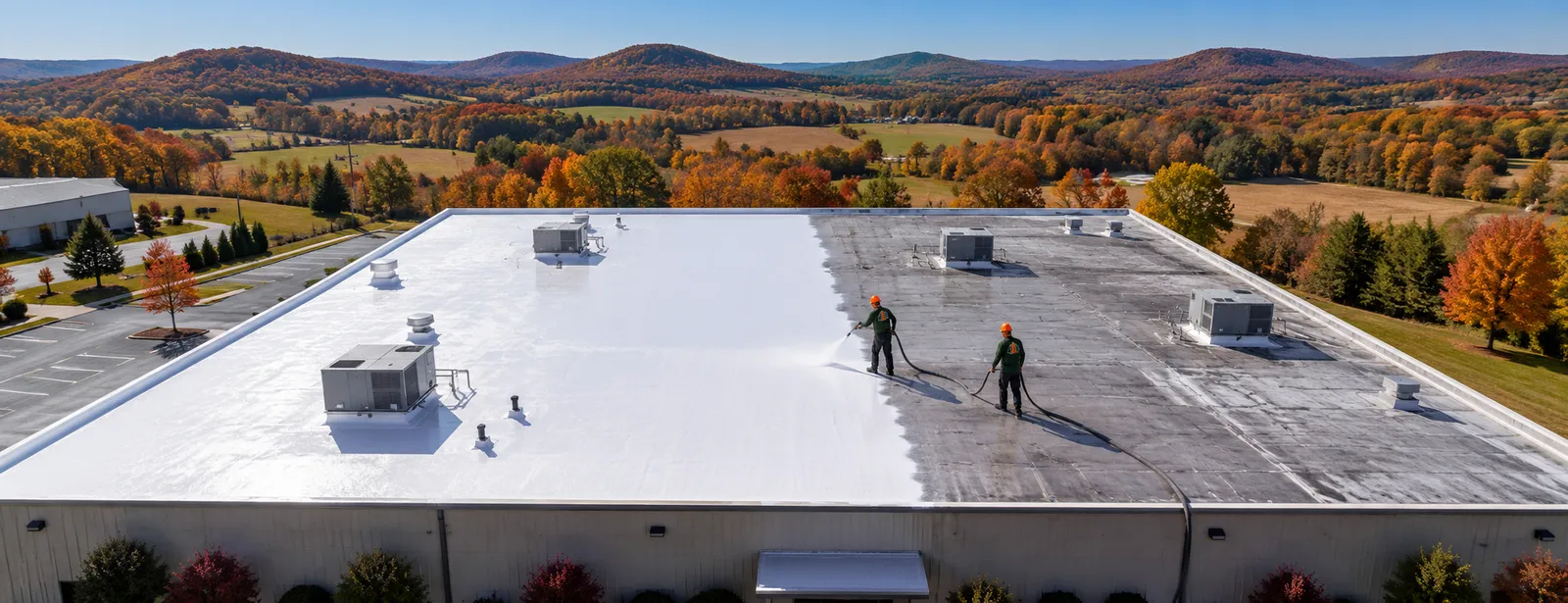
Both are white elastomeric coatings. Standing water is what separates them, so we look for low spots before choosing.
| Factor | Silicone | Acrylic |
|---|---|---|
| Standing Water | Stays intact where water sits at laps and gutters | Softens and breaks down where water ponds |
| Application Weather | Goes on during cooler days | Needs warmer, drier stretches to cure |
| Cleanup | Solvent cleanup | Water cleanup |
| Future Recoats | Bonds best to more silicone | Takes a wider range of recoat products |
| Foot Traffic | Slick when wet, so walk lanes get granules | Firmer footing |
Low-slope R-panel roofs with flat spots at the eave lean toward silicone. Steeper metal that drains fast leans toward acrylic.
Silicone earns its place where water lingers. These are the spots we mark on a roof sketch during the walk.
On a very low slope, rain backs up behind each panel overlap and sits there until it evaporates, slowly working into the joint.
Curbs and equipment stands dam the water running down the panels, leaving a wet patch on the high side of each unit.
Steel that sags between supports holds shallow puddles in the middle of the bay, and the coating there sees water after every storm.
Clogged or sagging gutters back water onto the last few feet of panel, where rust and ponding rings tend to show first.
Silicone comes in a few builds. The roof walk and the amount of standing water decide which one goes on.
Cleaned and primed R-panel or standing seam gets fabric at the laps and caps on the screws, then a silicone base and topcoat across the field.
Metal roof coatingGranules broadcast into the wet topcoat give grip along the paths to rooftop units, since cured silicone turns slick when wet.
A worn silicone roof is cleaned and recoated with silicone, or with a primer made for silicone, since later coats bond best that way.
Silicone fits roofs the other coatings struggle with. Here is what it gives a low-slope building.
Silicone resists breakdown under standing water better than water-based coatings, which makes it the pick for flat spots at the eave and behind curbs.
Because silicone tolerates cooler days than acrylic, the window for coating a roof in Madison County is wider than it is for water-based products.
Coating over solid panels or a firm membrane skips tear-off, so the deck, the insulation and the existing roof all stay put.
Years later, a worn silicone surface takes another coat of silicone after cleaning, a much smaller job than a new roof.
Note where the puddles form and how long they stay. That map tells us whether silicone, added slope or a repair comes first.
Start a free estimate for a silicone coating on your low-slope roof.
Get A Free EstimateFive decisions, starting on the roof and ending with the topcoat.
We walk the roof soon after rain when we can, marking ponding rings, wet insulation, open laps and rusted gutters on a roof sketch.
Silicone over wet insulation traps the water. Soft or wet areas found on the walk get cut out and replaced before anything is coated.
Rusted metal gets a rust-inhibiting primer, and some surfaces need the primer the coating maker lists. A small adhesion test patch settles it.
Laps, seams, curbs and skylight perimeters get reinforcing fabric set in base coat before the open field is sprayed.
The silicone goes on to the specified thickness, and granules go into the walk lanes so service techs keep their footing.
Silicone is one answer among several. These cover the roofs where water drains away or the building needs insulation.
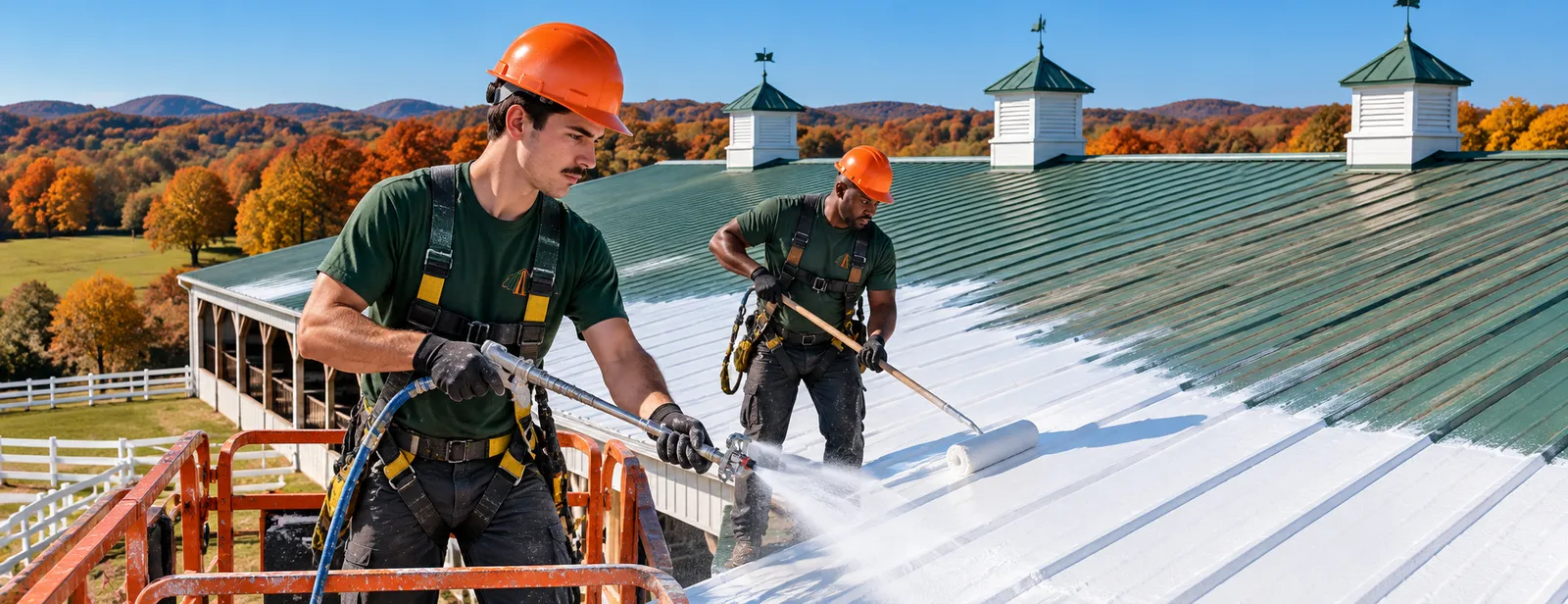
R-panel and standing seam roofs whose main problems are screws, laps and rust, with little standing water.
Richmond Metal Roof Coating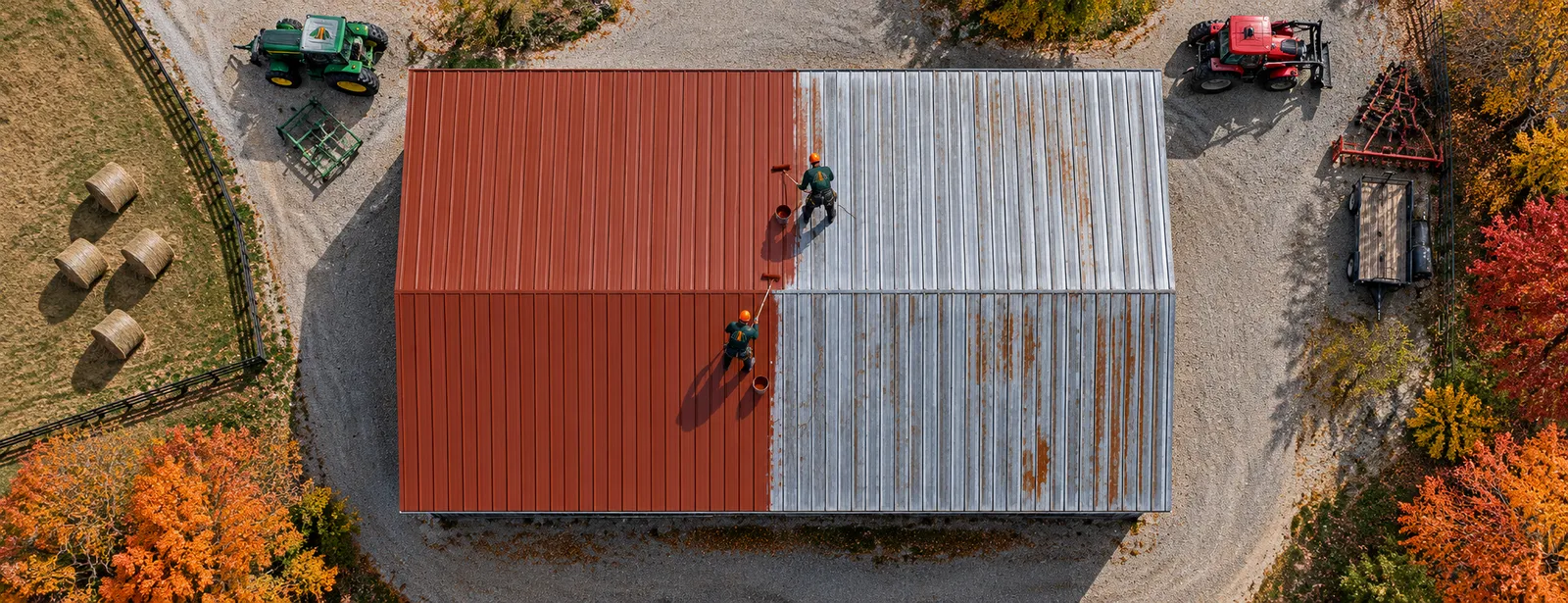
Steeper metal and other roofs that drain fully after rain, where a water-based white coat recoats easily.
Richmond Acrylic Roof Coating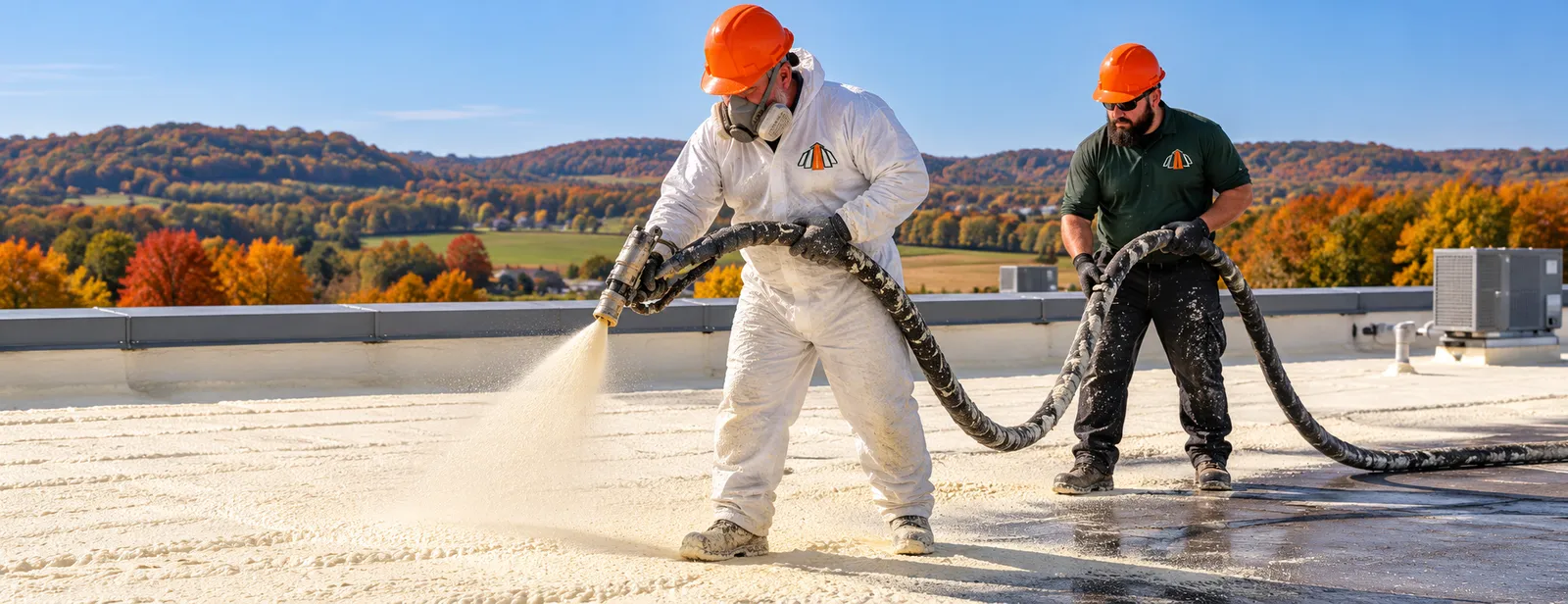
Roofs that need insulation or added slope, since foam can be built thicker toward low spots before the coating.
Richmond Spray Foam RoofingWhat owners ask before choosing silicone for a low-slope roof.
Question about your own roof?
Call UsWhen water lingers on the roof after rain: at end laps on a very low slope, behind rooftop units or in panels sagging between purlins.
Silicone resists breakdown under standing water better than water-based coatings. Plan for dirt pickup that dulls the white over time, silicone-only recoats, and granules in walk lanes for grip.
Yes. Dirt sticks to a silicone surface, and a white roof dulls as it ages; the Department of Energy notes that many roofs lose reflectance over time.
A rinse during routine roof checks keeps more of the white showing.
Hail dents metal and can split the coating at a sharp dent, while wind lifts loose ridge caps, eave trim and gutters.
Shallow dents on the panel flats usually leave the coating whole. After a storm, check ribs and fastener rows for splits, trim for lifted edges and gutters for bent hangers, then patch small breaks with the same silicone.
Plan on silicone again. A silicone surface bonds best to more silicone, so recoats use silicone or a primer made for it.
Keep the product name and job date from the first coating, since that record makes the recoat simpler.
It tolerates cooler days than acrylic, within the temperature limits on its product sheet.
Dew is the bigger issue in Madison County. Panels stay wet on cool mornings, and coating waits until the surface is dry and above the dew point.
Tell us the roof size and where water sits after rain, or call us to talk it through.
Leave your name and number and we will call you back about your commercial roof. Or call us now at (859) 204-8096.