Ridge
Ridge Cap Screws Backing Out
Screws along the ridge cap work loose first because the cap moves with both roof slopes.

We do metal roof coating in Paint Lick and around Garrard County, reworking ridge caps, closures and eave trim on older metal buildings along with the coating.

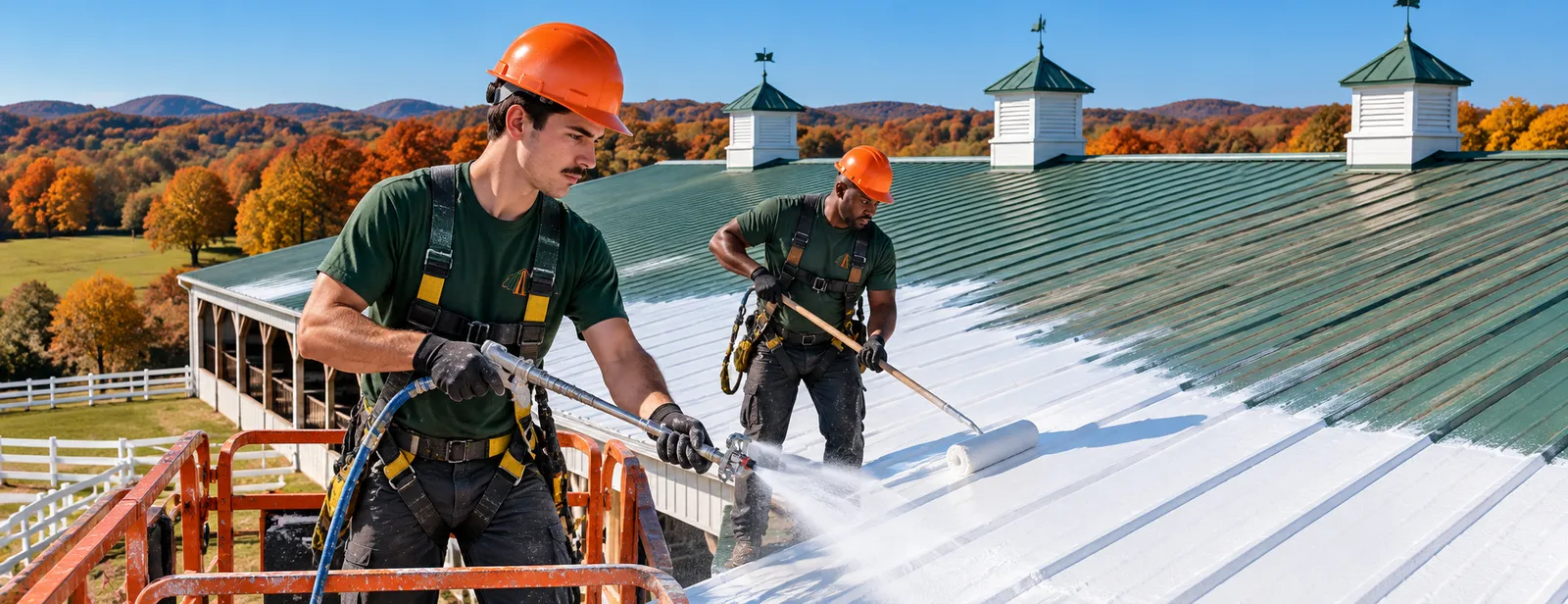
Older metal buildings lose their ridge cap screws, foam closures and eave trim first. Wind works the trim loose, closures crumble, and rain blows in at the peak and under the eave.
Paint Lick has no listing of its own on the state contact sheet, which assigns the county building inspector to Garrard County and Lancaster, so the county office is the first call. Its building code enforcement page asks for plans, the property address, truss diagrams where they apply, and a Workers' Affidavit of Assurances.
These are the edge and peak conditions we fix before the coating goes on.
Screws along the ridge cap work loose first because the cap moves with both roof slopes.
Foam closures under the ridge and eave break down with age, leaving gaps for blowing rain and birds.
Wind lifts loose rake and eave trim, and each lifted section lets rain run behind it toward the wall panels.
On wood-framed buildings, rafter tails and purlin ends under leaking eave trim rot and stop holding the trim screws.
Fixing the trim along with the coating closes the gaps a coating alone would miss.
New closures and sealed cap laps close the ridge against blowing rain and nesting birds, and the cap screws go back into fresh metal.
Refastened trim with sealed laps resists the wind that lifted it in the first place, along both eaves and up each rake edge.
Panels with solid steel stay on, so the budget goes to trim and coating rather than new metal for the whole building.
Separating trim and coating work from any framing repair makes the plan easy for the county office to follow, and keeps the paperwork to what the job really is.
Paint Lick buildings get one of these, matched to the roof.
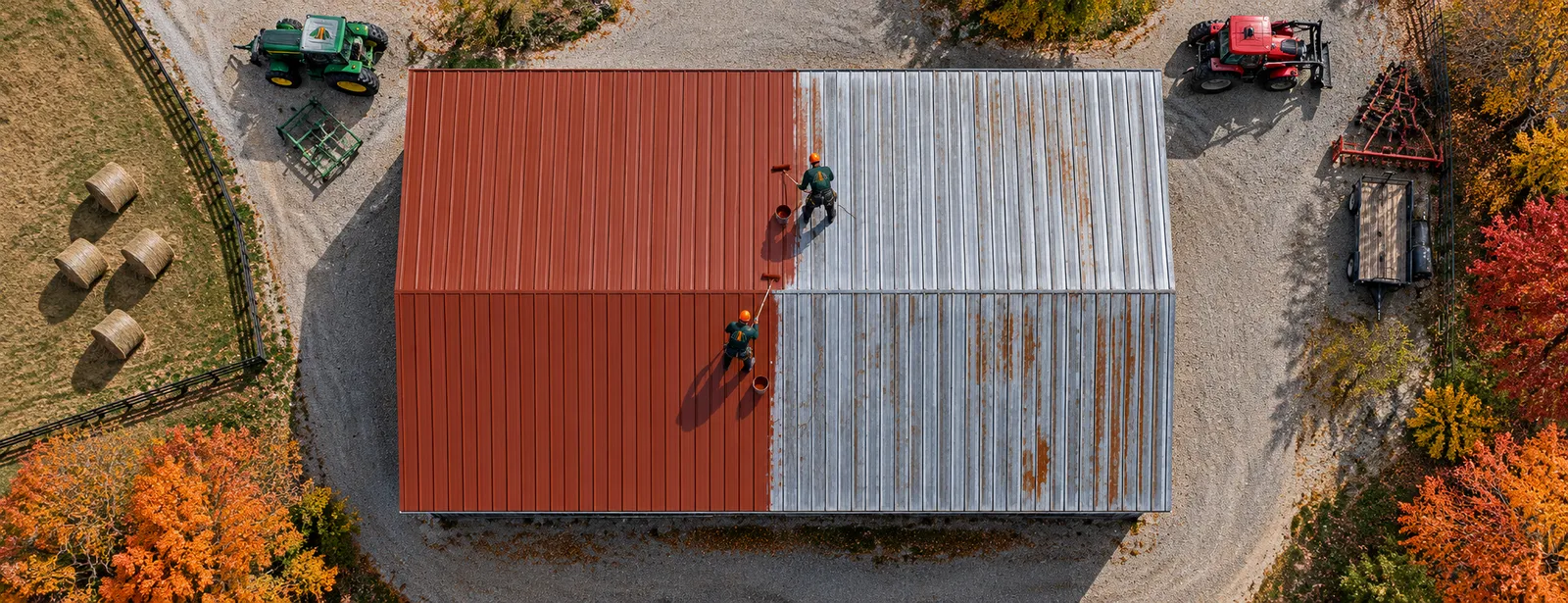
Pitched metal barns and shops take a white acrylic finish after the trim work. Closures go in before the topcoat.
Acrylic Roof Coating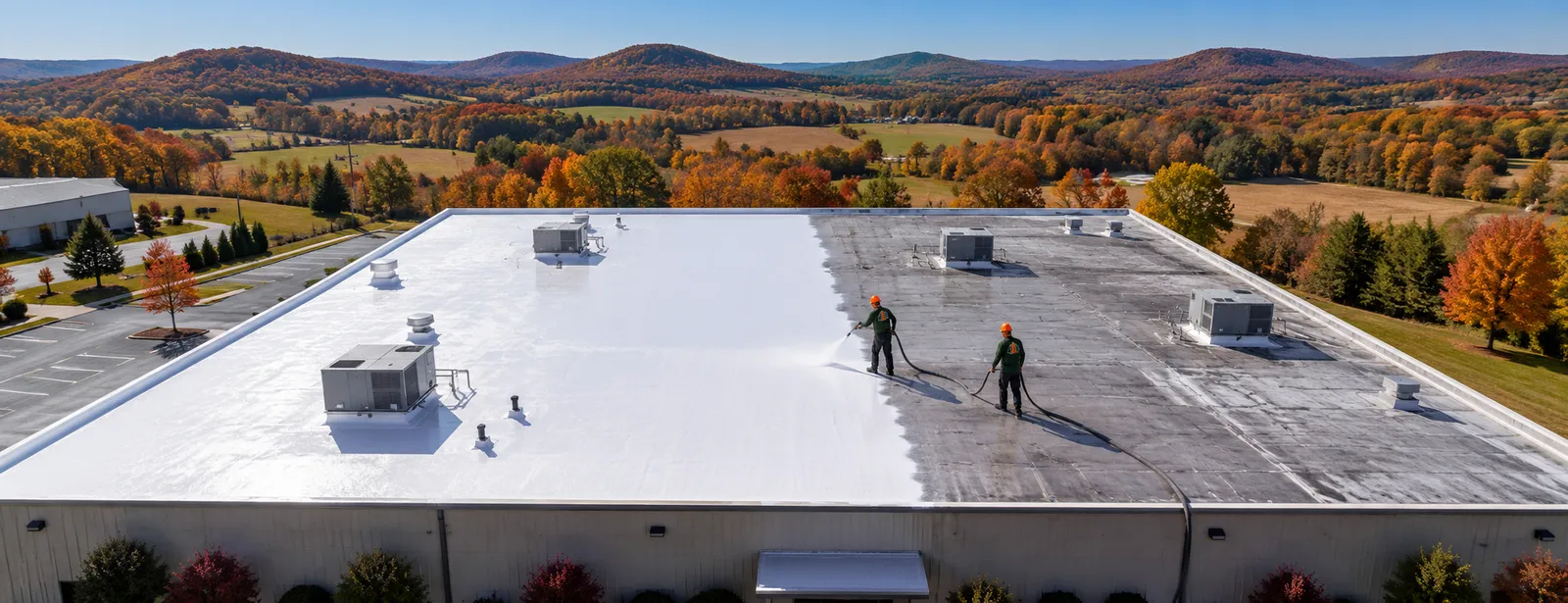
Low-slope sections that hold water get silicone over sealed laps and screws. Walk lanes get granules.
Silicone Roof Coating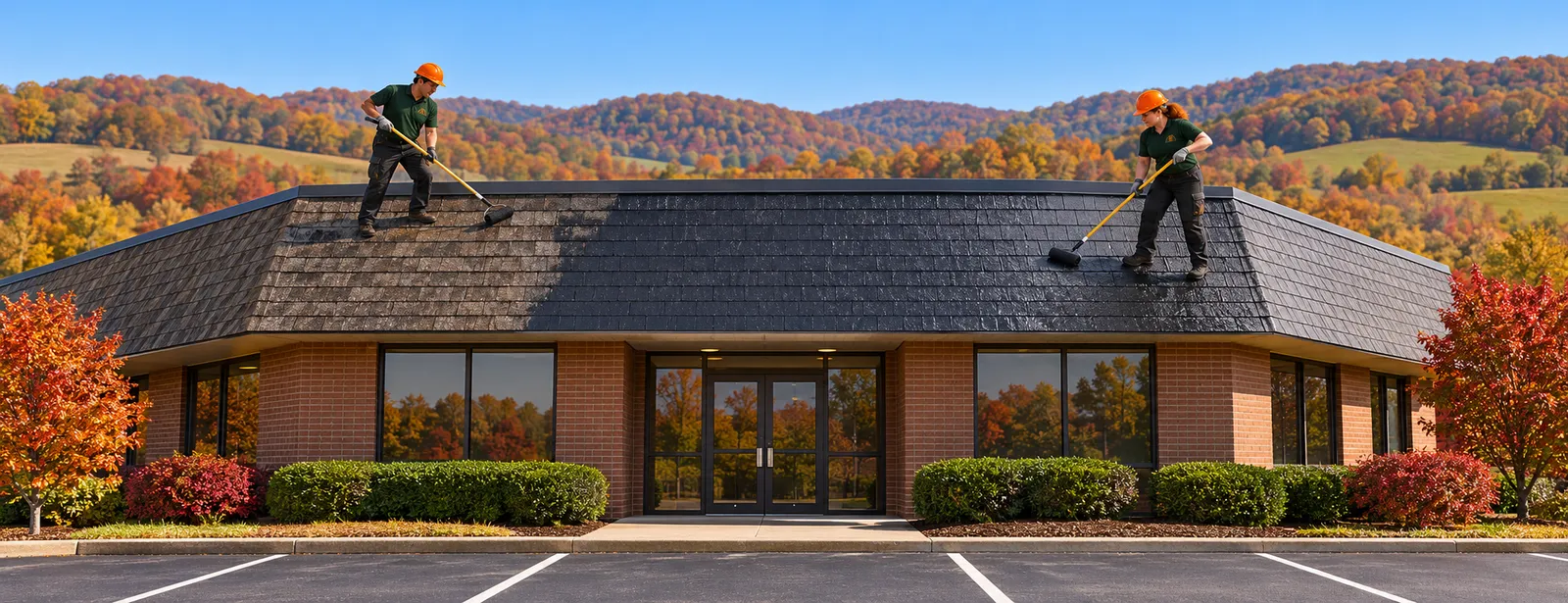
Churches and offices with shingles that still lie flat can take a shingle roof coating. Flashing gets checked first.
Shingle Roof CoatingTell us whether the leak shows near the peak or along an outside wall. That points us at the ridge or the eave first.
Five decisions, trim and paperwork included.
We walk the ridge, both eaves and the rakes, checking cap screws, closures and trim, then look inside for daylight at the peak.
Pure coating over existing panels touches no framing. Rotted purlins or rafter tails at the eave are framing work, and they go on the roof plan separately.
Check with the Garrard County office. Its enforcement page asks for plans, the property address, truss diagrams where they apply and a Workers' Affidavit of Assurances for the roof work.
Closures are replaced, cap and trim screws are swapped for larger ones, and cap laps are sealed with fabric before the field is coated. Bent trim pieces get replaced.
Pitched metal takes acrylic, low slopes take silicone, and shingled sections get a shingle coating if they qualify.
Besides Paint Lick, we coat metal roofs in the towns below. Missing your town? Call us or send us a message.
City permits, state plan review, equipment-heavy roofs.
Estill County barns where condensation rusts panels from below.
Rockcastle County roofs with old skylight panels to sort.
Powell County shops where gutters and downspouts matter most.
Jackson County roofs with purlins checked before coating.
Unincorporated farm sheds with lean-to roofs, some now shops.
River and rail town where roof panels get washed first.
Outside Berea's line, with service masts through roof panels.
What Paint Lick owners ask about the county office and trim work.
Question about your own roof?
Call UsGarrard County's local building inspector covers the county and the City of Lancaster under the state's contact sheet. Paint Lick has no listing of its own, so check with the Garrard County office first.
The county asks for plans, the address, truss diagrams and specs where they apply, and a Workers' Affidavit of Assurances. Spell out which panels stay, which framing members get replaced and what changes at the ridge cap and eave trim.
Ridge cap screws loosen as the cap moves with both slopes, and the foam closures under it crumble with age. Blowing rain then gets in at the peak, often far from where the drip shows.
Usually, if the metal is solid. Trim gets refastened with larger screws into fresh wood or steel, the laps get sealed, and the coating covers it. Bent or rusted-through trim gets replaced.
Only when framing changes. Rebuilding rotted purlins or rafter tails under a metal roof brings the truss item into play, while coating over existing panels touches none of the framing.
Shingled churches and offices can take a shingle coating when the shingles lie flat, stay well bonded and hold their granules. Flashing at walls and vents gets checked and repaired first.
Yes. Closures fill the gaps between the panel ribs and the ridge cap or eave trim, which keeps out blowing rain, birds and wasps. Old foam that has crumbled leaves those gaps wide open.
Start a free estimate for your Paint Lick building, or call about the trim, the ridge and the panels.
Leave your name and number and we will call you back about your commercial roof. Or call us now at (859) 204-8096.